Presumptive Taxation Under Section 58: Businesses, Goods Transporters and Professionals (Tax Year 2026-27)

Last updated: 22 July 2026 · Written and reviewed by CA Meet Dhrangadhariya, CSM & Co LLP

Quick summary

  • Section 58 of the Income-tax Act, 2025 combines the old sections 44AD, 44AE and 44ADA: a resident individual, HUF or firm (other than an LLP) can declare income at a fixed percentage of receipts instead of keeping full accounts.
  • For a business, income is 6% of receipts received in banking or online mode and 8% of the rest, if turnover is up to ₹2 crore (₹3 crore if cash receipts are at most 5%); for a specified profession, 50% of gross receipts up to ₹50 lakh (₹75 lakh if cash is at most 5%).
  • For goods carriages (up to ten vehicles), income is ₹1,000 a ton a month for heavy vehicles and ₹7,500 a month for others.
  • Declaring a lower profit than the presumptive figure means books and a tax audit if total income is above the exemption limit; opting out and in again locks you out for five years.

Small businesses and professionals can pay tax without keeping detailed accounts, by declaring a fixed share of their receipts as profit. In the 1961 Act these were three sections: 44AD (small business), 44AE (goods carriages) and 44ADA (professionals). The Income-tax Act, 2025 puts them in one section, section 58. The rules are the same in substance, except that the Finance Act, 2026 dropped one condition (that no deduction under section 144 is claimed).

The three presumptive cases (section 58(2))

Case Who Limit on receipts Income taken as
1. Any business other than goods carriage business Eligible assessee Up to ₹2 crore; or up to ₹3 crore if cash receipts are 5% or less of total turnover The higher of: (i) 6% of turnover received by specified banking or online mode during the tax year or before the due date for the return plus 8% of the remaining turnover; or (ii) the profit actually earned
2. Plying, hiring or leasing goods carriages A person who owns not more than ten goods carriages at any time in the year No turnover limit The higher of: (i) for a heavy goods vehicle, ₹1,000 per ton of gross vehicle weight or unladen weight per month or part of month, and for any other goods carriage ₹7,500 a month; or (ii) profit actually earned
3. Specified profession (section 62(4)) Specified assessee Up to ₹50 lakh; or up to ₹75 lakh if cash receipts are 5% or less of gross receipts The higher of 50% of gross receipts or the profit actually earned

A heavy goods vehicle is one with a gross vehicle weight above 12,000 kg. A person in possession of a goods carriage on hire purchase or instalments is treated as its owner (section 58(11)).

Who is eligible (section 58(11))

  • Eligible assessee (case 1): a resident individual, HUF or firm other than an LLP who has not claimed a deduction under Chapter VIII-C for the year, does not carry on a specified profession, does not earn commission or brokerage, and does not carry on an agency business.
  • Specified assessee (case 3): a resident individual or a firm other than an LLP.
  • A company, an LLP and a non-resident cannot use cases 1 and 3. Case 2 is open to any assessee who owns not more than ten goods carriages.

Specified professions (section 62(4)): legal, medical, engineering, architectural, accountancy, technical consultancy, interior decoration, information technology, company secretary, and any other profession notified by the Board.

Banking or online mode

Digital receipts are those by an account payee cheque or bank draft, by electronic clearing through a bank account, or by another prescribed electronic mode (section 66(32)). A cheque or draft that is not account payee is treated as cash (section 58(9)). Receipts up to the due date for the return count as digital if made by that date.

Other rules

  • No further deductions (section 58(4)): no loss, allowance or deduction is allowed against the presumptive income. All business expenses, including depreciation, interest and salaries, are deemed covered.
  • Firms (section 58(5)): for goods carriages, a firm deducts the salary and interest paid to its partners, within the limits of section 35(e).
  • Written down value (section 58(6)): the written down value of an asset used in the business is computed as if depreciation had been claimed and allowed each year, which matters if you leave the scheme or sell the asset.
  • Books and audit not needed (section 58(10)): sections 62 and 63 do not apply to the goods carriage business.

Declaring a lower profit

An assessee can claim that the profits actually earned are lower than the presumptive figures. If he does so and his total income exceeds the basic exemption limit, he must keep books of account under section 62 and get them audited under section 63 (section 58(3)). See our post on books of account and tax audit.

The five year lock-out (section 58(7) and (8))

If an eligible assessee declares presumptive profit for a year under case 1 and in any of the next five years declares profit lower than that, without following the section, he cannot use the section for five tax years after the year in which he did so. In those years, if his total income exceeds the exemption limit, he must keep books and get an audit.

Examples

1. Trader. Turnover ₹1,50,00,000, of which ₹1,20,00,000 was received by bank transfer and ₹30,00,000 in cash.

  • Digital receipts at 6% = ₹7,20,000
  • Other receipts at 8% = ₹2,40,000
  • Presumptive income = ₹9,60,000, unless actual profit is higher.
  • Turnover is within ₹2 crore, so the scheme applies. If cash were more than 5% of turnover and turnover above ₹2 crore, it would not.

2. Professional. A chartered accountant has gross receipts of ₹40,00,000. Presumptive income is 50% = ₹20,00,000. Where gross receipts are ₹60,00,000 with cash up to 5%, the scheme still applies (limit ₹75 lakh); with cash above 5% it does not (limit ₹50 lakh).

3. Transporter. Owns 2 heavy vehicles of 16 tons gross weight and 1 light goods vehicle, all for the whole year.

  • Heavy: 1,000 × 16 × 12 = ₹1,92,000 each, for two: ₹3,84,000
  • Light: 7,500 × 12 = ₹90,000
  • Presumptive income = ₹4,74,000, unless actual profit is higher.

Return form

A resident individual, HUF or a firm other than an LLP with presumptive income can file SUGAM (ITR-4) if they also meet the other conditions of Rule 164(6): no foreign assets or income, no directorship, no unlisted shares, total income up to ₹50 lakh, no more than two house properties, and no brought forward loss or loss to carry forward (see our post on which ITR form to file). The due date is 31 August if the accounts are not audited, and 31 October if they are audited.

Choosing: presumptive or full accounts

Point Presumptive Full accounts
Books Not required (unless you declare a lower profit) Required (section 62 conditions)
Audit Not required Required if turnover is above the limits
Expenses Not claimed Claimed in full
Loss Not available Can be carried forward
Best when Real margins are below the presumptive percentage Real margins are lower, or you want to claim losses

If your real profit is below the presumptive percentage and you have high expenses or losses, full accounts may reduce tax, but remember the books and audit costs.

Frequently asked questions

Who can opt for presumptive taxation?

A resident individual, HUF or firm other than an LLP (the “eligible assessee”), who has not claimed any deduction under Chapter VIII-C for the year, does not carry on a specified profession, and does not earn commission or brokerage or carry on any agency business. A “specified assessee” (resident individual or firm other than an LLP) can use the scheme for specified professions (section 58(11)).

What is the limit for business turnover?

₹2 crore, or ₹3 crore if cash receipts do not exceed 5% of total turnover. Receipts by a cheque or draft that is not account payee are treated as cash (section 58(9)).

How is business income worked out?

6% of the turnover received in specified banking or online mode during the year or before the return due date, plus 8% of the remaining turnover, or the profit actually earned if higher (section 58(2), Table serial 1).

How much do professionals declare?

50% of gross receipts, or the actual profit if higher, if gross receipts are up to ₹50 lakh (₹75 lakh if cash receipts are at most 5%). The scheme covers legal, medical, engineering, architectural, accountancy, technical consultancy, interior decoration, information technology and company secretary professions, and others notified (section 62(4)).

Can I claim a lower profit?

Yes, but you must then keep books of account and get them audited if your total income exceeds the basic exemption limit (section 58(3)).

What if I leave the scheme?

If you declare presumptive profit for a year and then, in any of the next five years, declare a lower profit without following the scheme, you cannot use the scheme for the five years after that year, and you must keep books and get an audit if income exceeds the exemption limit (section 58(7) and (8)).

Official sources

Related reading

Disclaimer

This article is for general informational purposes only and should not be considered professional advice. Please consult a qualified expert for advice tailored to your specific situation. The author and website owner are not liable for any errors or actions based on this content.

Deferred Tax Asset and Deferred Tax Liability

Last updated: 11 July 2026 · Written and reviewed by CA Meet Dhrangadhariya, CSM & Co LLP

Quick summary

  • Deferred tax is the tax effect of timing differences between book profit and taxable profit. It is an accounting item, not a separate tax.
  • Book profit higher than taxable profit creates a deferred tax liability (DTL). Taxable profit higher than book profit creates a deferred tax asset (DTA).
  • Permanent differences, such as penalties, create no deferred tax.
  • DTA on losses and unabsorbed depreciation needs virtual certainty; the note also covers MAT, tax holidays, presentation and worked examples.

How deferred tax arises

1. Compute book profit from the financial statements
↓
2. Compute taxable profit under the Income Tax Act
↓
3. Compare the two and separate reversible timing differences from permanent differences
↓
4. Ignore permanent differences, they create no deferred tax
↓
5. Book profit higher than taxable profit: create a deferred tax liability
↓
6. Taxable profit higher than book profit: create a deferred tax asset (for losses and unabsorbed depreciation only with virtual certainty)
↓
7. Reassess the balances at every balance sheet date

Deferred tax is an accounting item, covered under IND AS 12 - Income Taxes. It is the tax benefit that can be availed in the future years or the additional liability needing to be paid in the future years, depending on the various factors. Deferred tax arises as a result of temporary differences between income as per books of accounts and income as per income tax computation.

When the income computed as per income tax act is greater than profits calculated as per accounting standards, the difference between those two result in Deferred Tax Asset (DTA). Else, the difference is treated as Deferred Tax Liability (DTL).

Note: from 1 April 2026 the Income-tax Act, 2025 replaces the Income-tax Act, 1961 and section numbers have changed. Section numbers quoted below are those of the 1961 Act.

What is Deferred Tax?

The tax effect due to the temporary timing differences is termed as deferred tax which literally refers to the taxes postponed. Deferred tax is recognized only on temporary timing differences.

Timing Difference

  • Company derives its book profits from the financial statements prepared in accordance with the rules of the Companies Act and calculates its taxable profit based on provision of the Income Tax Act.
  • There is a difference between the book profit and taxable profit, because of certain items which are specifically allowed or disallowed for tax purposes each year.
  • This difference between the book and the taxable income or expense arises from items that are treated differently for book and tax purposes. It can be of two kinds:
  • Timing (temporary) difference: arises in one period and reverses in a later period, for example depreciation charged at different rates in books and for tax.
  • Permanent difference: never reverses, for example a penalty that is never allowed as a deduction. It creates no deferred tax.

Types of Deferred Tax

Deferred tax are classified into two:

  • Deferred Tax Liability
  • Deferred Tax Asset

Deferred Tax Liability

When the accounting income is more than the taxable income, the tax payable now is lower than the tax on the book profit. The company pays less tax now and more tax in future, so the difference is a liability.

For example, higher depreciation claimed for tax than in the books, or income recognised in the books that becomes taxable only in a later year.

Deferred Tax Asset

When the taxable income is more than the accounting income, the company pays more tax now than the book profit suggests. It expects to pay less tax in future, so the difference is an asset.

For example, higher depreciation in the books than for tax, provision for doubtful debts, gratuity and leave encashment (allowed for tax only when paid or written off), advance income that is taxed on receipt but recognised in the books later, and notional losses disallowed under the Income Tax Act.

A tabular explanation of the above concepts is provided below for easy reference:

S No Entity Profit Status Entity - Current Entity - Future Effect
1 Book profit higher than the Taxable profit Pay less tax now Pay more tax in future Creates Deferred Tax Liability (DTL)
2 Book profit is less than the Taxable profit Pay more tax now Pay less tax in future Creates Deferred Tax Asset (DTA)

Example of Deferred Tax Asset and Liability

DTA - Suppose, book profit of an entity before taxes is Rs 1,000 and this includes provision for bad debts of Rs.200.

For the purpose of tax profit, bad debts will be allowed in future when it’s actually written off. Hence taxable income after this disallowance will be Rs. 1200 and let’s say income tax rate is 20% then the entity will pay taxes on Rs. 1200 i.e (1200*20%) Rs. 240.

If bad debts were not disallowed, entity would have paid tax on Rs. 1000 amounting Rs 200 i.e 1000*20%. For the additional Rs. 40 which is already paid now, we have to create DTA. Entry for recording the DTA is as under:

  • Deferred Tax Asset Dr                    40
  • To Deferred Tax Expense Cr        40

(Being DTA of Rs. 40 accounted in the books)

DTL - Common example of DTL would be depreciation. When the depreciation rate as per the Income tax act is higher than the depreciation rate as per the Companies act (generally in the initial years), entity will end up paying less tax for the current period. This will create deferred tax liability in the books:

There are no DTA or DTL provisions made for permanent differences. E.g. Fines and penalties which are part of book profits but are not allowed for tax purposes.

Deferred tax implications on Unabsorbed Depreciation and Carry Forward of Losses

  • With respect to timing differences related to unabsorbed depreciation or carry forward losses, DTA is recognized only when the company reliably estimates sufficient future taxable income.
  • This test for virtual certainty has to be done every year on balance sheet date and if the condition is not fulfilled, such DTA/DTL should be written off.

While computing future taxable income, only profits pertaining to business and profession should be considered and not the income from other sources.

Example for Virtual Certainty

  • A projection of future profits prepared by an entity based on the future restructuring, sales estimation, future capital expenditure past experience etc., which are submitted to banks for loan is concrete evidence for virtual certainty.
  • But virtual certainty cannot be convincing if it’s only based on some binding export order which has the risk of cancellation anytime.
  • Virtual certainty must be based on projections that are more likely in future.

Presentation in Financial Statements

DTA is presented under non-current assets and DTL under the head non-current liability. Both DTA and DTL can be adjusted with each other provided they are legally enforceable by law and there is an intention to settle the asset and liability on a net basis.

Illustration on DTA/DTL Calculation

Let’s understand how DTA/DTL is created in books with a simple example (amount in lacs):

Particulars For Book For Tax Difference (DTA)/DTL @30%
Income 1000 800 200
Opening Balance of (DTA)/DTL - - - -
Depreciation 100 200 100 30
Sales Tax payable 50 0 (50) (15)
Leave encashment 200 100 (100) (30)
Closing balance of (DTA)/DTL - - - (15)

Current tax on Taxable income is 800*30% = 240

Deferred tax as per above = (15)

Net tax effect = 225

*The 30% rate is used only for illustration. Use the rate that actually applies to the entity for the year, for example the lower rates under sections 115BAA and 115BAB for companies, or the slab rates for individuals.

Effect on Tax Holiday With Respect To DTA/ DTL

A tax holiday is a benefit that exempts the profits of certain undertakings for a fixed period. A current example is section 10AA for units in Special Economic Zones, which is available only to units that began activity on or before 31 March 2020. The older holidays under sections 10A and 10B have been phased out.

Deferred tax (DT) from the timing difference that reverses during the tax holiday period should not be recognised during the enterprise’s tax holiday period. DT related to the timing difference that reverses after the tax holiday has to be recognised in the year of origination.

Illustration for Tax Holiday

A Ltd. is an undertaking whose profits are exempt for a tax holiday period that ends after Year 5. It has a timing difference on account of depreciation as follows: (Assume tax rate is 30%)

Year Timing Difference - Depreciation
1 2 lakhs
2 3 lakhs

In the case of tax-free companies, deferred tax liability is not recognised, for the timing differences that originate and reverse in the tax holiday period. Deferred tax liability is created only when the timing differences originate in the tax holiday period and reverse after the tax holiday. Adjustments are done on the basis of the FIFO method.

Suppose in the above example of the Rs 200,000, Rs 80,000 reverses within the tax holiday period, so DTL is created only on the balance. DTL will be created as given below:

Year Timing difference DTL @ 30%
1 120,000 (200,000-80,000) 36,000
2 300,000* 90,000

*Fully reversed after the tax holiday period. The total DTL balance at the end of the second year will be 126,000.

Effect of DTA/DTL on MAT

MAT is Minimum Alternate Tax which a company is required to pay if its tax payable as per normal provision of the income tax act is less than the tax computed at 15% of the book profit (plus surcharge and cess; the rate was 18.5% before AY 2020-21). MAT is levied under section 115JB of the income tax act; companies that opt for the concessional regimes under sections 115BAA and 115BAB do not pay MAT and it is calculated using the entity’s book profit as under: Book profit is increased by the following:

  • Income tax paid or provision
  • An amount carried to any reserve
  • Provisions made for unascertained liabilities
  • Deferred tax provision etc

And it is decreased by the following:

  • Amount withdrawn from any reserve or provision
  • Depreciation debited to P&L (except revaluation depreciation)
  • Lower of Loss brought forward or unabsorbed depreciation
  • Deferred tax credited to P&L etc.

There are controversies if deferred tax liability debited to P&L should be added to the book income for the purpose of MAT calculation. Kolkata Tribunal in Balrampur Chini’s case has held that the deferred tax liability should not be added back whereas the Chennai Tribunal in Prime Textiles Ltd case has held otherwise.

“Deferred tax charge is not a provision for tax but is a provision for tax effect for difference between taxable income and accounting income and further that deferred tax charge cannot be termed as income-tax paid or payable, which has to be paid out of the profit earned. Reserves mentioned in Section 115JB are different, it can be unilaterally transferred back to P&L account or can be utilised for issuing bonus shares etc. However, amounts created towards deferred tax charge cannot be so transferred or utilized”

“The Chennai Tribunal observed that AS-22 is mandatory as per Section 211(3) of the Companies Act, 1956, however, the same is not notified by the Central Government under Section 145(2) of the IT Act. Moreover, the deferred tax liability cannot be considered as ascertained liability and therefore, assessing officer has every power to make adjustment on this account as it cannot be termed as tinkering of audited accounts prepared in accordance with the provisions of the Companies Act.”

These rulings show that tribunals have taken different views. Check the current wording of Explanation 1 to section 115JB, and the equivalent provision of the Income-tax Act, 2025, before relying on either view.

Whether MAT credit can be considered as a Deferred Tax Asset per AS 22?

  • As per AS 22, deferred tax assets and liability arise due to the difference between book income & taxable income and do not rise on account of tax expense itself.
  • MAT does not give rise to any difference between book income and taxable income.
  • It is not appropriate to consider MAT credit as a deferred tax asset in accordance with AS 22.
  • MAT credit is separately recognized as an asset (MAT credit entitlement) in the books, not as a Deferred Tax Asset.
  • Under Ind AS 12, unused tax credits, which include MAT credit, can be recognised as a deferred tax asset to the extent it is probable they will be used. The answer therefore differs between AS 22 and Ind AS 12.

Key takeaways

  1. Deferred tax is an accounting concept and not a direct tax provision, this might arise because of difference in the accounting profit and taxable profits.
  2. Deferred tax liability would arise when a company would pay less tax at present but expected to pay higher taxes in future.
  3. Timing (temporary) differences between book income and taxable income create deferred taxes, whereas permanent differences do not result in a DTA or DTL.

Final Word

Deferred tax is often mistaken for a tax concept, but it is actually an accounting concept that reflects the tax impact arising from differences in the treatment of items under financial statements and tax records.

Frequently asked questions

What is the difference between DTA and DTL?

A deferred tax liability arises when book profit is higher than taxable profit, so less tax is paid now and more later. A deferred tax asset arises when taxable profit is higher than book profit, so more tax is paid now and less later.

Is deferred tax created on permanent differences?

No. Only timing (temporary) differences that reverse in later periods create deferred tax. Items such as penalties that are never allowed for tax create no DTA or DTL.

Can a company recognise a deferred tax asset on carried forward losses?

Under AS 22 only when there is virtual certainty, supported by convincing evidence, of sufficient future taxable income. The test is repeated at every balance sheet date.

Is MAT credit a deferred tax asset?

Under AS 22 it is shown separately as MAT credit entitlement and not as a deferred tax asset. Under Ind AS 12 unused tax credits can be recognised as a deferred tax asset if their use is probable.

Official sources

Related reading

Disclaimer

This article is for general informational purposes only and should not be considered professional advice. Please consult a qualified expert for advice tailored to your specific situation. The author and website owner are not liable for any errors or actions based on this content.
Is ESOP Discount a Deductible Expense for the Employer? (Tax Year 2026-27)

Last updated: 17 September 2026 · Written and reviewed by CA Meet Dhrangadhariya, CSM & Co LLP

Quick summary

  • The discount an employer gives on shares issued under an ESOP (market price less exercise price) has been held to be an allowable business expense, as employee compensation.
  • The leading rulings are the ITAT Special Bench and the Karnataka High Court in Biocon, followed by the Delhi High Court.
  • The Income-tax Act, 2025 has no separate provision for it, so the claim rests on the general deduction in section 34 (earlier section 37(1)).
  • The claim is spread over the vesting period, and the employee is separately taxed on the perquisite at exercise.

When a company issues shares to employees under an ESOP at less than the market price, it gives up value. Can the company claim that difference, the “discount”, as an expense in computing its business profits? For years the department said no. The courts have said yes.

The position in the Income-tax Act, 2025

The Act taxes the employee on the benefit: the fair market value on the exercise date less the exercise price is a perquisite (section 17(1)(d) and (4)(h)). It does not carry a matching rule for the employer’s deduction.

The employer’s claim therefore rests on the general deduction in section 34: expenditure, not capital or personal, laid out or expended wholly and exclusively for the purposes of the business or profession, which is not covered by the specific deduction sections. Section 34 corresponds to section 37(1) of the 1961 Act, on which the case law is based. We found nothing in the 2025 Act that changes the reasoning.

Why the department objected

The usual grounds were that no cash leaves the company on a share issue, that the discount is a notional loss of capital receipt rather than an expense, and that the liability is contingent until the employee exercises the option.

What the courts have held

  • Biocon Ltd v DCIT (ITAT Special Bench, Bangalore, 16/07/2013): the discount on ESOP shares is employee remuneration expenditure and allowable under section 37(1).
  • Karnataka High Court in Biocon (reported December 2020): the department’s appeal was dismissed. Where options vest over a period, for example 25% each year over four years, the employee gets a definite right to that portion at each vesting date and the company is bound to allow it. The discount is therefore an ascertained liability, not a contingent one. Section 37(1) does not require a cash pay out.
  • Delhi High Court: the department’s appeals were dismissed in line with Biocon, in the Lemon Tree Hotels matter, and the court has since followed Biocon in the matter reported as PVR Ltd v CIT.

The employer’s deduction is a business expenditure and the employee’s perquisite is a salary item, so one does not depend on the other.

How to claim it

  1. The reported rulings measure the discount as the market price on the grant date less the exercise price, and treat it as accruing as each tranche vests. Claim each tranche in the year it vests, use one method consistently, and take advice on the method before you adopt it.
  2. Keep the plan document, the board and shareholder approvals, the vesting schedule and the valuation with the return.
  3. Deduct and deposit TDS on the employee’s perquisite at exercise, and report it in Form 123 and the salary TDS certificate.
  4. Where the company is an eligible start-up under section 140, the employee’s tax is payable later (within 14 days of the earliest of 60 months, sale or leaving the job), but the employer’s deduction question remains the same.

Before you rely on this

  • The rulings turn on the facts and terms of the plans before the courts. A plan run through a trust, or one where the employer reimburses a trust, can raise separate questions, so look at your own plan terms.
  • The case summaries above are taken from the reports linked below. Read the full order before you quote it to a client.

Frequently asked questions

Is the ESOP discount deductible for the company?

Courts have held that it is employee compensation cost and an allowable business expenditure. The leading ruling is Biocon Ltd, where the ITAT Special Bench (2013) allowed it and the Karnataka High Court upheld that view.

Which section gives the deduction?

The Income-tax Act, 2025 has no section on ESOP discount specifically. The claim is under the general deduction for business expenditure in section 34, which replaced section 37(1) of the 1961 Act.

In which year is the deduction claimed?

The courts have followed the vesting. Where options vest over several years, each vesting gives the employee a definite right, so the discount for that portion is an ascertained liability of that year.

What is the discount?

The difference between the market price of the share and the price at which the option is exercised. The Karnataka High Court treated it as the cost of securing the employees’ services.

Does the employee also pay tax?

Yes. The employee is taxed on the same difference (FMV on exercise less exercise price) as a perquisite under section 17(1)(d). The employer’s deduction and the employee’s perquisite are separate computations.

Official sources

Disclaimer

This article is for general informational purposes only and should not be considered professional advice. Please consult a qualified expert for advice tailored to your specific situation. The author and website owner are not liable for any errors or actions based on this content.
CARO 2020: Applicability, Exemptions and the 21 Clauses of the Companies (Auditor’s Report) Order

Last updated: 09 October 2026 · Written and reviewed by CA Meet Dhrangadhariya, CSM & Co LLP

Quick summary

  • CARO 2020 is an Order under section 143(11) of the Companies Act, 2013 that adds 21 matters to the statutory auditor’s report, for financial years starting on or after 01/04/2019. It replaced CARO 2016.
  • It does not apply to banking and insurance companies, Section 8 companies, one person companies, small companies, and a small private company with paid-up capital and reserves up to Rs 1 crore, borrowings up to Rs 1 crore and revenue up to Rs 10 crore (that is not a subsidiary or holding company of a public company).
  • For consolidated financial statements only clause (xxi) applies.
  • Where an answer is unfavourable or qualified, the auditor must state the basis.

Section 143(11) of the Companies Act lets the Central Government direct that the auditor’s report of specified companies include a statement on matters it lists. The Companies (Auditor’s Report) Order, 2020 (CARO 2020) is that direction. It supersedes the 2016 Order and applies to auditor’s reports for financial years commencing on or after 01/04/2019.

Who is covered

CARO 2020 applies to every company including a foreign company, except:

  1. a banking company;
  2. an insurance company;
  3. a company licensed under section 8 of the Companies Act (Section 8 company);
  4. a One Person Company and a small company; and
  5. a private limited company, not being a subsidiary or holding company of a public company, which has all of these: paid-up capital and reserves and surplus of not more than Rs 1 crore at the balance sheet date; no borrowings above Rs 1 crore from any bank or financial institution at any time in the year; and total revenue (as disclosed in Schedule III, including discontinued operations) of not more than Rs 10 crore in the year.

The Order does not apply to the auditor’s report on consolidated financial statements, except clause (xxi).

What the auditor must report: the 21 clauses of paragraph 3

Clause Subject
(i) Property, plant and equipment and intangibles: proper records, physical verification, title deeds of immovable property held in the company’s name, revaluation by a registered valuer (change of 10% or more), benami proceedings
(ii) Inventory: physical verification and discrepancies of 10% or more per class; for working capital limits above Rs 5 crore on security of current assets, whether quarterly returns agree with the books
(iii) Investments, guarantees, security and loans: amounts, terms not prejudicial, repayment schedule, overdues above 90 days, renewals to settle overdues, loans repayable on demand or without terms and loans to promoters and related parties
(iv) Compliance with sections 185 and 186 on loans, investments, guarantees and security
(v) Deposits: compliance with RBI directions and sections 73 to 76 and orders of tribunals or courts
(vi) Cost records under section 148, where specified
(vii) Statutory dues (GST, PF, ESI, income-tax and others): regularity of deposit, arrears over six months, and disputed dues with the forum
(viii) Unrecorded transactions surrendered or disclosed as income in tax assessments
(ix) Borrowings: defaults to lenders (in the prescribed format), wilful defaulter status, end use of term loans, short term funds used for long term, funds taken for obligations of subsidiaries, associates or joint ventures, and loans raised on pledge of their securities
(x) Public issues and preferential allotments or private placements: use of funds and compliance with sections 42 and 62
(xi) Fraud: any fraud by or on the company, whether Form ADT-4 report under section 143(12) was filed, and whistle-blower complaints considered
(xii) Nidhi companies: net owned funds to deposits ratio of 1:20, ten per cent unencumbered term deposits, defaults on deposits
(xiii) Related party transactions: compliance with sections 177 and 188 and disclosure in the financial statements
(xiv) Internal audit system commensurate with the size and nature of business, and whether the internal auditors’ reports were considered
(xv) Non-cash transactions with directors or connected persons and section 192
(xvi) NBFC and housing finance activity: registration under section 45-IA of the RBI Act, activity without a certificate of registration, status as a Core Investment Company and number of CICs in the group
(xvii) Cash losses in the year and the preceding year
(xviii) Resignation of statutory auditors during the year and whether the issues raised by the outgoing auditor were considered
(xix) Whether the auditor believes no material uncertainty exists about the company meeting its liabilities as they fall due within one year of the balance sheet date
(xx) CSR: transfer of unspent amount to a Schedule VII fund within six months, and to a special account for an ongoing project (section 135(5) and (6))
(xxi) Consolidated statements: qualifications or adverse remarks in the CARO reports of the companies included, with details of each company and paragraph

Unfavourable or qualified answers

Where the answer to any matter in paragraph 3 is unfavourable or qualified, the report must also state the basis for that answer (paragraph 4).

Practical points for companies

  • Keep documents ready for the clauses that need evidence: title deeds, stock count records, quarterly returns filed with banks, loan registers, statutory dues ageing, the list of related party transactions, the internal audit reports, and CSR bank account records.
  • The auditor will ask about any ADT-4 filing, resignation of the previous auditor, whistle-blower complaints and defaults to lenders, because these have their own clauses.
  • A company that is out of the Order because of the small private company exemption should test the three limits at each balance sheet date, because crossing any of them brings it under the Order for that year.
  • The clause numbers above follow the text of the Order. The ICAI has issued guidance notes and later clarifications on how to report; use the current ICAI guidance for the working papers.

Points to check

  • This post follows the text of the Order as published by the Ministry of Corporate Affairs. Amendments after that text, if any, were not reviewed.
  • The Order sits alongside section 143(3) reporting and Rule 11 of the Audit and Auditors Rules, which add their own items (such as the audit trail statement).

Frequently asked questions

What is CARO 2020?

The Companies (Auditor’s Report) Order, 2020, made by the Central Government under section 143(11) of the Companies Act, 2013 after consulting the NFRA. It requires the auditor’s report to include a statement on the matters in paragraph 3 of the Order.

From when does it apply?

To the auditor’s report for financial years commencing on or after 01/04/2019. It superseded the Companies (Auditor’s Report) Order, 2016.

Which companies are exempt?

Banking companies, insurance companies, Section 8 companies, one person companies, small companies, and a private company that is not a subsidiary or holding company of a public company and has paid-up capital and reserves of not more than Rs 1 crore, borrowings from banks and financial institutions of not more than Rs 1 crore at any time in the year, and total revenue of not more than Rs 10 crore.

Does CARO 2020 apply to consolidated financial statements?

Only clause (xxi), which asks for qualifications or adverse remarks in the CARO reports of the companies included in the consolidation.

What if the answer to a clause is unfavourable?

The auditor must state the basis for the unfavourable or qualified answer.

Does the Order cover a foreign company?

Yes. It applies to every company including a foreign company, except those listed in the exemptions.

Official sources

Related reading

Disclaimer

This article is for general informational purposes only and should not be considered professional advice. Please consult a qualified expert for advice tailored to your specific situation. The author and website owner are not liable for any errors or actions based on this content.
National Financial Reporting Authority (NFRA) under Section 132: Functions, Investigation Powers and Penalties on Auditors

Last updated: 09 October 2026 · Written and reviewed by CA Meet Dhrangadhariya, CSM & Co LLP

Quick summary

  • The NFRA is the audit regulator set up under section 132 of the Companies Act, 2013. It recommends accounting and auditing standards, monitors compliance with them and oversees the quality of audit services.
  • It can investigate professional or other misconduct by chartered accountants and firms, with the powers of a civil court, and once it starts an investigation no other body can proceed on the same misconduct.
  • Penalty on proof of misconduct: Rs 1 lakh up to five times the fees for an individual, and Rs 5 lakh up to ten times the fees for a firm, plus debarment from six months up to ten years.
  • An aggrieved person can appeal to the Appellate Tribunal.

Until the Companies Act, 2013, audit quality in India was supervised mainly by the profession’s own body, the Institute of Chartered Accountants of India. Section 132 brought in a statutory regulator, the National Financial Reporting Authority (NFRA), which the Central Government constitutes by notification.

What the NFRA does (section 132(2))

  1. Recommends to the Central Government accounting and auditing policies and standards for companies or classes of companies and their auditors.
  2. Monitors and enforces compliance with accounting standards and auditing standards, in the prescribed manner.
  3. Oversees the quality of service of the professions associated with ensuring compliance with those standards, and suggests measures for improvement.
  4. Performs other related functions as prescribed.

The Central Government prescribes accounting standards (section 133) and auditing standards (section 143(10)) as recommended by ICAI, in consultation with and after examination of the NFRA’s recommendations. The Government can also direct that the audit report of a class of companies include a statement on specified matters, in consultation with the NFRA (section 143(11)); the Companies (Auditor’s Report) Order is made under this power.

Composition

A chairperson who is a person of eminence with expertise in accountancy, auditing, finance or law, and not more than fifteen other members, part-time and full-time, as prescribed. The chairperson and members declare that there is no conflict of interest. Full-time members cannot be associated with any audit firm, including related consultancy firms, during their appointment and for two years after. The NFRA works through divisions, each headed by the chairperson or an authorised full-time member, and an executive body of the chairperson and full-time members. Its head office is in New Delhi.

Investigation and enforcement (section 132(4))

  • The NFRA can investigate, either on its own motion or on a reference from the Central Government, matters of professional or other misconduct by any member or firm of chartered accountants, for the class of bodies corporate or persons prescribed. “Professional or other misconduct” has the meaning given in section 22 of the Chartered Accountants Act, 1949.
  • Once the NFRA has begun an investigation, no other institute or body may start or continue proceedings on that misconduct.
  • It has the powers of a civil court for discovery and production of books and documents, summoning and examining persons on oath, inspecting books, registers and documents, and issuing commissions for examination of witnesses or documents.

Penalties and debarment

Where misconduct is proved, the NFRA can order:

Against Penalty
An individual Not less than Rs 1 lakh, up to five times the fees received
A firm Not less than Rs 5 lakh, up to ten times the fees received

It can also debar the member or firm from being appointed as an auditor or internal auditor, from undertaking any audit of financial statements or internal audit, and from performing valuation under section 247, for a minimum of six months and up to ten years.

Appeal

A person aggrieved by an NFRA order imposing a penalty or debarment can appeal to the Appellate Tribunal in the prescribed manner and on payment of the prescribed fee (section 132(5)).

Accounts and reporting

The NFRA keeps accounts as prescribed, its accounts are audited by the Comptroller and Auditor-General, and its annual report and the CAG’s audit report are laid before each House of Parliament.

What it means for companies and auditors

  • Audit firms should treat the NFRA’s standards and quality expectations as part of their working papers and engagement planning.
  • Which bodies corporate fall under the NFRA’s investigation jurisdiction is set in the Rules (the National Financial Reporting Authority Rules, 2018); these thresholds are not in the Act, so check the current Rules before concluding that your company or client is or is not covered.
  • Where the NFRA starts an investigation, ICAI’s disciplinary process on the same matter stops.

Points to check

  • This post follows section 132 of the Companies Act as published on India Code, including amendments up to the footnotes in that edition.
  • Details of the NFRA’s procedure, jurisdiction thresholds and fees are in the Rules, which were not reviewed for this post.

Frequently asked questions

What is the NFRA?

The National Financial Reporting Authority is the audit and accounting regulator constituted by the Central Government under section 132 of the Companies Act, 2013, with its head office at New Delhi.

What does the NFRA do?

It recommends accounting and auditing policies and standards to the Central Government, monitors and enforces compliance with them, and oversees the quality of service of the professions associated with ensuring compliance, suggesting improvements.

Can the NFRA investigate chartered accountants?

Yes. It can investigate, on its own or on a reference from the Central Government, professional or other misconduct by a member or firm of chartered accountants, for the class of bodies corporate or persons prescribed. Once it has started, no other institute or body can start or continue proceedings on that misconduct.

What penalties can the NFRA impose?

On proof of misconduct, a penalty of Rs 1 lakh to five times the fees received for an individual, and Rs 5 lakh to ten times the fees for a firm, and a bar on being an auditor, internal auditor or valuer for six months up to ten years.

Who can be on the NFRA?

A chairperson of eminence in accountancy, auditing, finance or law, and not more than fifteen other part-time and full-time members, who must declare no conflict of interest. Full-time members cannot be associated with an audit firm during their term and for two years after.

Can an NFRA order be appealed?

Yes, to the Appellate Tribunal in the prescribed manner and on payment of the prescribed fee.

Official sources

Disclaimer

This article is for general informational purposes only and should not be considered professional advice. Please consult a qualified expert for advice tailored to your specific situation. The author and website owner are not liable for any errors or actions based on this content.
Powers and Duties of a Statutory Auditor (Sections 143 to 147): Audit Report, Fraud Reporting, Prohibited Services and Penalties

Last updated: 09 October 2026 · Written and reviewed by CA Meet Dhrangadhariya, CSM & Co LLP

Quick summary

  • An auditor has a right of access at all times to the books and vouchers and may ask officers for any information needed. The audit report must say whether the accounts give a true and fair view and whether the company has adequate internal financial controls with reference to financial statements.
  • The auditor must report suspected fraud by officers or employees: to the Central Government above the prescribed amount, otherwise to the audit committee or the Board.
  • An auditor cannot provide services such as bookkeeping, internal audit, financial information system design, actuarial, investment advisory, investment banking, outsourced financial services or management services.
  • For contravening sections 139, 143, 144 or 145 the fine is Rs 25,000 to Rs 5 lakh or four times the remuneration, whichever is less. Wilful deception can mean up to one year in prison and a fine of up to Rs 25 lakh.

The statutory auditor is appointed by the members to protect them, so the Companies Act, 2013 gives the auditor wide powers, a long list of things that the audit report must say, and strong penalties when those duties are not performed.

Powers (section 143(1))

  • A right of access at all times to the books of account and vouchers of the company, wherever they are kept.
  • The right to require from officers of the company any information and explanation needed for the audit.
  • A duty to inquire, among other matters, whether: loans and advances made against security are properly secured and not prejudicial to the company or its members; transactions represented only by book entries are prejudicial; shares, debentures or other securities (other than by an investment or banking company) were sold below their purchase price; loans and advances are shown as deposits; personal expenses are charged to revenue account; and, where shares are said to have been allotted for cash, cash was actually received.
  • The auditor of a holding company has access to the records of its subsidiaries and associate companies as far as consolidation requires.
  • The accounts of a branch office are audited either by the company’s auditor or by another qualified person appointed under section 139 (or, for a branch outside India, by a local qualified person).

What the audit report must contain (section 143(2) to (4))

The auditor reports to the members on the accounts and every financial statement laid before the company in general meeting, taking account of the Act, accounting and auditing standards and the matters required by rules or by an order under section 143(11) (such as CARO). The report states whether, to the best of the auditor’s information and knowledge, the accounts give a true and fair view of the state of affairs, profit or loss and cash flow for the year.

It must also state:

  1. whether all information and explanations needed were obtained, and if not, the details and effect;
  2. whether proper books of account have been kept, and proper returns received from branches not visited;
  3. how a separate branch auditor’s report was dealt with;
  4. whether the balance sheet and profit and loss account agree with the books and returns;
  5. whether the financial statements comply with the accounting standards;
  6. observations on financial transactions or matters with an adverse effect on the company’s functioning;
  7. whether any director is disqualified under section 164(2);
  8. any qualification, reservation or adverse remark on the maintenance of accounts;
  9. whether the company has adequate internal financial controls with reference to financial statements and the operating effectiveness of those controls; and
  10. such other matters as are prescribed.

Where any item is answered in the negative or with a qualification, the report must give the reasons.

Every auditor must comply with the auditing standards (section 143(9)); until the Central Government notifies standards on the recommendation of ICAI, the standards specified by ICAI are deemed to be the standards.

Reporting fraud (section 143(12) and (15))

If, in the course of duties, the auditor has reason to believe that an offence of fraud involving the prescribed amount is being or has been committed in the company by its officers or employees, the auditor reports it to the Central Government within the prescribed time and manner. For a fraud below the prescribed amount, the report goes to the audit committee (or to the Board, where there is no audit committee). The company must disclose such frauds, reported to the committee or Board but not to the Government, in the Board’s report. A report made in good faith is not a breach of any other duty (section 143(13)). The same section applies to cost accountants doing cost audit and company secretaries doing secretarial audit.

Penalty for failing to report: Rs 5 lakh in a listed company, and Rs 1 lakh in any other company. The prescribed amount, time and form are in the Companies (Audit and Auditors) Rules, 2014, so check the current figures there.

Services an auditor cannot render (section 144)

An auditor may provide other services only if the Board or audit committee approves them, and never these, directly or indirectly, to the company, its holding company or its subsidiary: accounting and bookkeeping; internal audit; design and implementation of any financial information system; actuarial services; investment advisory services; investment banking services; outsourced financial services; management services; and any other prescribed service. “Directly or indirectly” includes services through relatives, partners, a parent, subsidiary or associate entity, or any entity in which the auditor or a partner has significant influence or control, or whose name or brand is used. An auditor who renders any such service is also disqualified under section 141(3)(i).

Signing the report (section 145)

The auditor signs the report, and signs or certifies any other document of the company, in accordance with section 141(2) (only partners who are chartered accountants sign for a firm). Qualifications, observations or adverse comments on financial transactions in the report are read before the company in general meeting and open to inspection by any member.

Penalties (section 147)

Who and what Consequence
Company contravening sections 139 to 146 Fine of Rs 25,000 to Rs 5 lakh; every officer in default, Rs 10,000 to Rs 1 lakh
Auditor contravening section 139, 143, 144 or 145 Fine of Rs 25,000 to Rs 5 lakh, or four times the remuneration, whichever is less
Auditor acting knowingly or wilfully to deceive the company, shareholders, creditors or tax authorities Imprisonment up to one year and fine of Rs 50,000 to Rs 25 lakh, or eight times the remuneration, whichever is less
Auditor convicted under section 147(2) Refund of remuneration and damages for loss caused by incorrect or misleading statements in the audit report (to the company, statutory bodies, members or creditors)
Audit firm, where partners acted fraudulently The partners and the firm are jointly and severally liable; for criminal liability other than fine, only the partners concerned

The Tribunal can also direct a change of auditor where the auditor has acted fraudulently or colluded in fraud, and the auditor is barred from appointment for five years under section 140(5).

Points to check

  • The amount above which fraud goes to the Central Government, and the time and form of reporting, are set by the Rules and can change.
  • Listed companies and other classes face further reporting duties from the Companies (Auditor’s Report) Order and SEBI rules, which this post does not cover.
  • The text above follows the Companies Act as published on India Code, including its amendments up to the footnotes in that edition.

Frequently asked questions

What are the main powers of a company auditor?

A right of access at all times to the books of account and vouchers, wherever kept, the right to require information and explanations from officers, and, for a holding company’s auditor, access to the records of subsidiaries and associates for consolidation.

What must the audit report state?

Whether the accounts give a true and fair view, whether all information was obtained, whether proper books were kept, whether the balance sheet and profit and loss account agree with the books, whether the financial statements comply with accounting standards, adverse observations, director disqualification, qualifications on accounts and adequacy and operating effectiveness of internal financial controls.

Does the auditor have to report fraud?

Yes. If the auditor has reason to believe that an offence of fraud involving the prescribed amount is being or has been committed by officers or employees, it is reported to the Central Government. Smaller frauds are reported to the audit committee or the Board, and the company must disclose them in the Board’s report.

Which services is an auditor barred from providing?

Accounting and bookkeeping, internal audit, design and implementation of financial information systems, actuarial services, investment advisory, investment banking, outsourced financial services, management services and any other service prescribed, whether direct or indirect, to the company, its holding or its subsidiary.

What is the penalty if an auditor fails to report fraud?

A penalty of Rs 5 lakh for a listed company and Rs 1 lakh for any other company.

Can an auditor be held liable to refund fees?

Yes. On conviction under section 147(2) the auditor must refund the remuneration received and pay damages for loss caused by incorrect or misleading statements in the audit report.

Official sources

Related reading

Disclaimer

This article is for general informational purposes only and should not be considered professional advice. Please consult a qualified expert for advice tailored to your specific situation. The author and website owner are not liable for any errors or actions based on this content.
Appointment of Auditor under Section 139 of the Companies Act, 2013: Term, Rotation, First Auditor, Casual Vacancy and Removal

Last updated: 09 October 2026 · Written and reviewed by CA Meet Dhrangadhariya, CSM & Co LLP

Quick summary

  • A company appoints an auditor at its first AGM, to hold office till the sixth AGM, and then for each further block of five years (until the conclusion of every sixth AGM).
  • The first auditor is appointed by the Board within 30 days of registration, or by members at an EGM within 90 days if the Board fails. For a Government company, the CAG appoints within 60 days.
  • Listed companies and prescribed classes must rotate: an individual for one term of five years, a firm for two terms, then a five year cooling off.
  • Removal before the term ends needs a special resolution and the previous approval of the Central Government. A resigning auditor files a statement within 30 days.

Every company must have a statutory auditor. Section 139 of the Companies Act, 2013 says how the auditor is appointed, how long the appointment lasts, who steps in when the post falls vacant, and when a change is compulsory. Sections 140 and 141 deal with removal, resignation, and who may be an auditor.

Who can be an auditor (section 141)

  • A chartered accountant, or a firm in which the majority of partners practising in India are chartered accountants (an LLP counts as a firm). Only the partners who are chartered accountants may sign.
  • Not eligible: a body corporate other than an LLP; an officer or employee of the company; a person whose relative is a director or key managerial personnel; a person (or relative or partner) holding securities of the company above the permitted limit, or indebted to it above the prescribed amount; a person with a prescribed business relationship; a person holding more than 20 company audits; a person convicted of fraud in the last ten years; and a person who provides the prohibited non-audit services under section 144.
  • If an auditor becomes disqualified after appointment, the office is vacated and treated as a casual vacancy.

First auditor

Type of company Who appoints By when Holds office till
Company other than a Government company Board of Directors Within 30 days of registration Conclusion of the first AGM
Same, if the Board fails Members at an extraordinary general meeting Within 90 days (the Board informs the members) Conclusion of the first AGM
Government company Comptroller and Auditor-General of India Within 60 days of registration; if CAG does not, the Board within next 30 days; if the Board fails, members within 60 days at an EGM Conclusion of the first AGM

At the first AGM and after

At the first annual general meeting, the company appoints an individual or a firm as auditor to hold office from the conclusion of that meeting till the conclusion of its sixth annual general meeting, and thereafter till the conclusion of every sixth meeting. Before the appointment, the company must obtain the auditor’s written consent and a certificate that the appointment is within the prescribed conditions, including that the auditor meets section 141. The company must inform the auditor of the appointment and file a notice with the Registrar within 15 days of the meeting (this is done in Form ADT-1).

“Appointment” includes re-appointment. A retiring auditor can be re-appointed if not disqualified, has not given written notice of unwillingness, and no special resolution has been passed to appoint someone else or to say that he shall not be re-appointed. If no auditor is appointed at an AGM, the existing auditor continues.

If the company must have an Audit Committee, appointments and the filling of a casual vacancy are made after taking its recommendations into account.

Rotation (section 139(2))

No listed company, and no company in a class prescribed by rules, may appoint or re-appoint:

  • an individual auditor for more than one term of five consecutive years, or
  • an audit firm for more than two terms of five consecutive years.

After completing its term, the individual (or the firm) is not eligible for re-appointment in the same company for five years. A firm that has a common partner with an outgoing firm, whose tenure has just expired, cannot be appointed for five years. Members may also resolve that the auditing partner and team be rotated, or that the audit be done by more than one auditor (section 139(3)). The companies in the prescribed classes are set out in the Companies (Audit and Auditors) Rules, 2014: please check the paid-up capital and borrowing thresholds in the current rules before concluding that your company is outside rotation.

Government companies

The Comptroller and Auditor-General appoints the auditor within 180 days of the start of each financial year, and the auditor holds office till the AGM.

Casual vacancy (section 139(8))

  • Company not audited by a CAG-appointed auditor: the Board fills the vacancy within 30 days. If the vacancy arose from the auditor’s resignation, the company must approve the appointment at a general meeting convened within three months of the Board’s recommendation. The new auditor holds office till the next AGM.
  • Company audited by a CAG-appointed auditor: the CAG fills the vacancy within 30 days; if it does not, the Board fills it within the next 30 days.

Special notice and removal (section 140)

  • Special notice is required for a resolution at an AGM appointing a person other than the retiring auditor, or saying that the retiring auditor shall not be re-appointed. It is not needed where the retiring auditor has completed the maximum term of five or ten years under section 139(2). The company sends a copy of the notice to the retiring auditor, and if the auditor makes a reasonable written representation, the company states this in the notice to members and sends the representation to members. If it is received too late, the auditor can ask that it be read out at the meeting. The Tribunal can stop this if the right is being abused.
  • Removal before the term ends: only by a special resolution of the company, after getting the previous approval of the Central Government in the prescribed manner, and after the auditor has been given a reasonable chance to be heard.
  • Resignation: the auditor files a statement in the prescribed form with the company and the Registrar within 30 days of the resignation, giving reasons. For a failure to do so the auditor is liable to a penalty of Rs 50,000 or the amount of the remuneration, whichever is less, and Rs 500 for each day of continuing failure, up to Rs 2 lakh.
  • Fraud: the Tribunal can direct a company to change its auditor if the auditor has acted fraudulently or colluded in fraud. An auditor against whom a final order is passed is not eligible for appointment in any company for five years.

Remuneration (section 142)

Fixed by the members in general meeting or in the manner they decide. The Board can fix the first auditor’s remuneration. Expenses incurred for the audit are included, but not remuneration for other services requested by the company.

Points to check

  • Auditor rotation applies only to listed companies and the prescribed classes, so a small private company can keep the same auditor for any number of terms.
  • Forms (ADT-1 and the resignation forms), thresholds and fees come from the Rules and can change; use the current Companies (Audit and Auditors) Rules, 2014 and the MCA portal.
  • The text above follows the Companies Act as published on India Code, including its amendments up to the footnotes in that edition.

Frequently asked questions

When is the first auditor appointed?

By the Board of Directors within 30 days of the date of registration of the company. If the Board fails, it informs the members, who appoint within 90 days at an extraordinary general meeting. The first auditor holds office till the conclusion of the first AGM.

What is the term of an auditor?

At the first AGM the company appoints an auditor to hold office till the conclusion of its sixth AGM, and thereafter till the conclusion of every sixth meeting. This is the usual five year term.

Is auditor rotation compulsory for every company?

No. Section 139(2) applies to listed companies and the classes of companies prescribed by rules. An individual can serve one term of five consecutive years and an audit firm two terms, with a five year cooling off after that.

How is a casual vacancy filled?

The Board fills it within 30 days. If the vacancy is due to the auditor’s resignation, the company must also approve the appointment at a general meeting held within three months of the Board’s recommendation, and the appointee holds office till the next AGM.

Who appoints the auditor of a Government company?

The Comptroller and Auditor-General of India, within 180 days from the start of the financial year. The first auditor is appointed by the CAG within 60 days of registration.

Can an auditor be removed in the middle of the term?

Only by a special resolution of the company, after obtaining the previous approval of the Central Government, and after giving the auditor a reasonable opportunity of being heard.

What if no auditor is appointed at an AGM?

The existing auditor continues to be the auditor.

Official sources

Related reading

Disclaimer

This article is for general informational purposes only and should not be considered professional advice. Please consult a qualified expert for advice tailored to your specific situation. The author and website owner are not liable for any errors or actions based on this content.
Audit Trail in Accounting Software: Companies Rule 3(1), Auditor Reporting under Rule 11(g), Retention and Penalty

Last updated: 09 October 2026 · Written and reviewed by CA Meet Dhrangadhariya, CSM & Co LLP

Quick summary

  • Every company that keeps its books in accounting software must use software that records an audit trail of each transaction, keeps an edit log of every change with its date, and cannot have the audit trail switched off.
  • The rule applies from the financial year beginning on or after 01/04/2023 (FY 2023-24), after two deferments.
  • The statutory auditor must report on it in the audit report under Rule 11(g): whether the feature existed, operated all year for all transactions, was not tampered with, and was preserved as the law requires.
  • Books of account are kept for eight financial years under section 128, and the audit trail has to be preserved for the same statutory period.

An audit trail is a time-stamped record that shows who entered or changed a transaction and when. For companies, having it in the accounting software is no longer a best practice but a legal requirement, and the statutory auditor must say in the audit report whether the company complied.

The rule for companies

The proviso to Rule 3(1) of the Companies (Accounts) Rules, 2014 says that, for a financial year beginning on or after 01/04/2023, every company which uses accounting software for maintaining its books of account shall use only such software which:

  1. has a feature of recording an audit trail of each and every transaction,
  2. creates an edit log of each change made in the books of account along with the date when the change was made, and
  3. ensures that the audit trail cannot be disabled.

The date was first 01/04/2021 and was deferred twice, finally to 01/04/2023 by the Companies (Accounts) Second Amendment Rules, 2022. For a company with a March year-end, the first year covered was FY 2023-24.

Who is covered

Every company that uses accounting software, which includes private limited companies, OPCs, Section 8 companies, and Government companies. If the books are kept entirely on paper, the rule has nothing to operate on. Accounting software can be on-premise, on the cloud, a SaaS product, hosted in India or abroad, or run by a service provider for the company. Where a separate system (say a billing or payroll tool) generates entries that become part of the books, that system needs the feature too, because its records form part of the books of account.

What the auditor reports: Rule 11(g)

Rule 11(g) of the Companies (Audit and Auditors) Rules, 2014, read with section 143(3), requires the audit report to state in the section on other legal and regulatory requirements whether the company has used accounting software which:

  • has a feature of recording audit trail (edit log), and that feature has been operated throughout the year for all transactions recorded in the software, and
  • the audit trail has not been tampered with, and
  • the audit trail has been preserved by the company as per the statutory requirements for record retention.

The ICAI Implementation Guide expects the auditor to check whether the feature can be configured or switched off, whether it was enabled for the whole year, whether every transaction is covered, and whether the records have been kept for the statutory period. Where the books are entirely manual, the auditor states that as a fact.

How long to keep it

Section 128(5) requires books of account and the related vouchers to be kept for not less than eight financial years immediately preceding the current year (or all years, if the company is younger than eight years). The audit trail is preserved for that period, which means log storage, backup and the ability to produce the data on request.

Penalty

Section 128(6) provides that the managing director, the whole-time director in charge of finance, the Chief Financial Officer or any other person the Board has charged with complying with section 128, is liable to a fine of at least Rs 50,000 and up to Rs 5 lakh if the section is contravened. The imprisonment limb that earlier appeared in that section was omitted by an amendment effective 21/12/2020.

What a company should do

  • Ask the software vendor in writing whether the audit trail is on by default, whether any user, including an administrator, can disable it, and how long logs are kept.
  • Check the settings once a year and note the date of the check.
  • Do not delete, trim or overwrite log data to save space before the retention period ends.
  • Keep a single list of every system that feeds the books, with its audit trail status.
  • Discuss any gap with the auditor before the year closes, because a gap is reported in the audit report.

Points to check

  • This post is based on the text of the Rules as described in ICAI material, and on section 128 as reported by legal databases. Check the current text on the MCA website and in the latest ICAI guidance before you rely on it for a particular case.
  • The 2024 ICAI guide deals with detailed audit queries, such as database-level logging; follow it for your own audit file.

Frequently asked questions

Who must use accounting software with an audit trail?

Every company, including a private limited company, OPC and Section 8 company, that maintains its books of account in accounting software. Where books are kept entirely manually, the rule has nothing to apply to and the auditor reports that fact.

From when does it apply?

From the financial year beginning on or after 01/04/2023, which is FY 2023-24. The original 2021 date was deferred twice.

What must the software do?

Record an audit trail of each and every transaction, create an edit log of each change made in the books with the date of the change, and ensure that the audit trail cannot be disabled.

What does the auditor report?

Under Rule 11(g), in the report on other legal and regulatory requirements, whether the company used software with an audit trail feature, whether it operated throughout the year for all transactions, whether it was tampered with, and whether the audit trail was preserved as per statutory requirements.

How long should the audit trail be kept?

The books of account and the vouchers must be kept for at least eight financial years under section 128(5), and the audit trail is to be preserved in line with that statutory period.

Does it apply to a partnership firm or LLP?

The rule is made under the Companies Act, 2013 and applies to companies. A firm or LLP is not covered by it.

What is the penalty?

Section 128(6) provides a fine of Rs 50,000 to Rs 5 lakh on the managing director, whole-time director in charge of finance, the CFO or the person the Board has charged with complying with section 128. The words providing imprisonment were omitted in December 2020.

Official sources

Disclaimer

This article is for general informational purposes only and should not be considered professional advice. Please consult a qualified expert for advice tailored to your specific situation. The author and website owner are not liable for any errors or actions based on this content.
AS 22 Accounting for Taxes on Income

Last updated: 10 September 2026 · Written and reviewed by CA Meet Dhrangadhariya, CSM & Co LLP

Quick summary

  • Profits in your accounts rarely match taxable profits, and AS 22 governs how the difference is accounted for.
  • Differences are either timing differences (they reverse in later years) or permanent differences (they never reverse).
  • Timing differences create deferred tax assets or deferred tax liabilities.
  • This guide covers when and how to apply AS 22, the deferred tax computation, and the comparison with Ind AS 12 and IFRIC 23.

How AS 22 is applied at a glance

1. Compare accounting income with taxable income
↓
2. Split the difference into timing differences (reversible) and permanent differences (not reversible)
↓
3. Ignore permanent differences, they create no deferred tax
↓
4. Taxable income higher than accounting income gives a deferred tax asset, recognised only with reasonable certainty (virtual certainty if there are losses or unabsorbed depreciation)
↓
5. Accounting income higher than taxable income gives a deferred tax liability
↓
6. Report tax expense as current tax plus deferred tax in the profit and loss statement

Profits as per your financial statements rarely match with your taxable profits. And it would be incorrect to ignore to account for the difference between these two profits. To govern the accounting for such differences, we cover the following topics  in this article w.r.t. AS 22 Accounting for Taxes on Income:

Introduction - Accounting Standard

Accounting Standard 22 has been prescribed by ICAI to be applied in accounting for taxes on income. This AS is applied to match the differences between accounting income and taxable income. 1. Accounting income is the net profit before tax for a period, as reported in the profit and loss statement. 2. Taxable income is the income on which income tax is payable, computed by applying provisions of the Income Tax Act, 1961 & Rules.

Types of differences and why they appear

The differences can be of two types:

Timing difference

Timing differences are those differences between accounting income and taxable income which can be reversed in one or more subsequent periods. For example, Depreciation allowed as per WDV method for computing taxable income and as per SLM method for computing accounting income.

Permanent difference

Permanent differences are those differences between accounting income and taxable income which cannot be reversed any subsequent period. For example, Donation paid in cash is disallowed in computing taxable income whereas it is allowed as expenditure while computing accounting income. There can be differences between accounting income and taxable income because of the following reasons:

  1. Expenses debited in profit and loss statement, but disallowed as per Income Tax Act 1961, while computing taxable income

  2. Provision for Bad/doubtful debts allowed while computing accounting income, but disallowed while computing taxable income

  3. Charging depreciation using different rates as per Companies Act 2013 and Income Tax Act 1961

  4. Any income recognized on an accrual basis in profit and loss statement but recognized on receipt basis in subsequent period for computing taxable income. In order to account for these kinds of differences, AS 22 needs to be applied.

When to apply AS 22 Accounting for Taxes on Income

Deferred Tax Liability formula

AS 22 needs to be applied when there are differences between taxable income and accounting income. If taxable income is greater than accounting income, then it will result in deferred tax asset. And if accounting income is greater than taxable income, then it will result in deferred tax liability.

When the difference is resulting in deferred tax asset, then it should be recognized only when there is a reasonable certainty of its realization. The recognition of deferred tax asset should be to the extent of the reasonable certainty of the expected realization. The reasonable certainty can be determined by making the realistic estimates of future profits based on the examination of profits and loss statement of earlier periods.

Say, an entity has unabsorbed depreciation or carry forward of losses. In such a case, deferred tax asset should be recognized to the extent there is a virtual certainty supported by convincing evidence. Virtual certainty is a matter of judgment of convincing evidence, which should be available in a concrete form at a particular date.

How to apply AS 22 Accounting for Taxes on Income

The application of AS 22 can be explained with the help of examples: Example of timing difference:

Particulars Year 1 Year 2 Year 3
Profit before tax (A) 100,000 200,000 180,000
Depreciation as per Companies Act (B) 25,000 25,000 25,000
Accounting income (A-B) 75,000 175,000 125,000
Depreciation as per Income tax Act (C) 50,000 0 10,000
Taxable income (A-C) 50,000 200,000 170,000
Timing difference (D) 25,000 -25,000 -15,000
Current tax @ 30% 15,000 60,000 51,000
Deferred tax (D * 30%) 7,500 -7,500 -4,500
Total tax expense 22,500 52,500 46,500
Profit after tax 52,500 122,500 78,500

Deferred tax computation

Particulars Year 1 Year 2 Year 3
Opening balance of timing difference 0 25,000 0
Addition 25,000 0 15,000
Deletion 0 25,000 0
Closing balance of timing difference 25,000 0 15,000
Deferred tax @ 30% 7,500 7,500 4,500
DTA/DTL Creation of DTL Reversal of DTL Creation of DTA
Journal Entry P&L A/c Dr. To DTL DTL Dr. To P&L A/c DTA Dr. To P&L A/c

Comparison between AS 22 and IND AS 12

Basis AS 22 Accounting for Taxes on Income IND AS 12 (Income taxes)
Recognition AS 22 recognized tax effect of differences between taxable income and accounting income. IND AS 12 recognized tax effect of differences between assets and/or liabilities and their tax base.
Approach AS 22 is based on profit or loss statement approach. IND AS 12 is based on balance sheet approach.
Differences The types of differences on which AS 22 is applied are timing differences and permanent differences. The types of differences on which IND AS 12 is applied are taxable temporary differences and deductible temporary differences. Permanent differences are not dealt in by this standard.
Recognition of Deferred tax asset/deductible temporary differences DTA is recognized only when and to the extent there is a reasonable certainty of its realization Deductible temporary differences are recognized to the extent of the probability of taxable profits in future periods.
Disclosure AS 22 deals with the disclosure of DTA/DTL in the balance sheet. IND AS 12 deals with the recognition of current or deferred tax as income or expense in profit and loss statement. It also deals with the disclosure of out of profit and loss transaction in the balance sheet as current or non-current assets/liability.
Revaluation of assets AS 22 does not cover the difference arising between taxable income and accounting income due to the revaluation of assets. IND AS 12 deals with the difference between carrying the amount of revalued asset and its tax base.
Goodwill AS 22 does not cover the difference arising due to goodwill arising a business combination. As per IND AS 12, the difference between carrying the amount of goodwill and its tax base (which will be NIL) is the taxable temporary difference. It does not allow the recognition of such difference because goodwill is measured as a residual and its recognition would increase the carrying amount of goodwill.
The concept of virtual certainty When an entity has unabsorbed depreciation or carry forward of losses then in such a case deferred tax asset should be to the extent there is a virtual certainty supported by convincing evidence. There is no concept of virtual certainty in IND AS 12. Deductible temporary differences are recognized to the extent of the probability of taxable profits in future periods.
Tax holiday AS 22 specifically provides guidance regarding recognition of deferred tax in the situations of Tax Holiday under Sections 80-IA, 80-IB, 10A and 10B of Income-tax Act. IND AS 12 does not specifically deal with the situations of the tax holiday.
Capital Loss AS 22 provides guidance regarding recognition of DTA in case of loss under the head of ‘capital gains’. IND AS 12 does not specifically provide for the same.

IFRIC 23

IFRIC 23 also provides for Uncertainty over Income Tax Treatments. It requires an entity to treat uncertain tax treatments depending on which method will be best suited for its resolution. The major difference between AS 22 and IFRIC 23 is that IFRIC 23 requires an entity, while determining the current and deferred income tax assets and liabilities, to make an assessment whether it is probable that taxation authority will accept an uncertain tax treatment.

If it is not probable, then entity should reflect that uncertainty through either expected value approach or most likely approach. IFRIC 23 will be applicable for annual reporting periods beginning on or after 01.01.2019.

Frequently asked questions

What is AS 22?

AS 22 is the Accounting Standard issued by ICAI that prescribes how taxes on income, including current tax and deferred tax, are accounted for in financial statements.

What is the difference between a timing difference and a permanent difference?

A timing difference arises in one period and reverses in later periods, for example depreciation under different methods. A permanent difference never reverses, for example an expense disallowed by the Income Tax Act.

Does AS 22 create deferred tax on permanent differences?

No. Deferred tax is recognised only for timing differences, not for permanent differences.

How is AS 22 different from Ind AS 12?

AS 22 applies to companies following the Companies (Accounting Standards) Rules and uses the income statement approach based on timing differences, while Ind AS 12 follows a balance sheet approach based on temporary differences.

Official sources

Related reading

Disclaimer

This article is for general informational purposes only and should not be considered professional advice. Please consult a qualified expert for advice tailored to your specific situation. The author and website owner are not liable for any errors or actions based on this content.
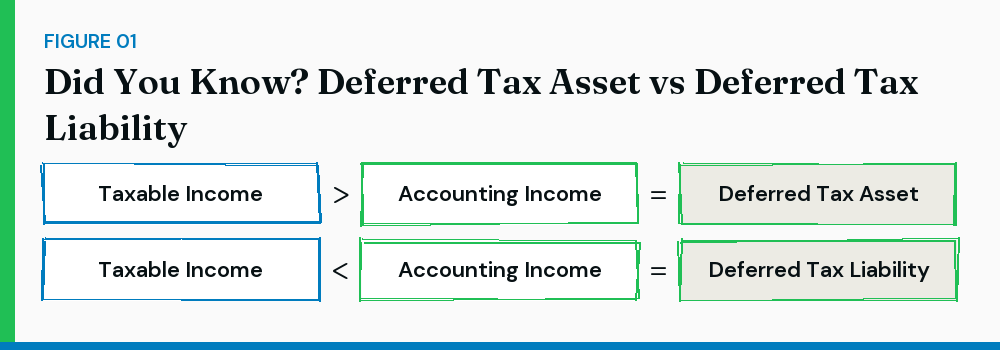
Indian Accounting Standard 12: Income Taxes

Last updated: 19 July 2026 · Written and reviewed by CA Meet Dhrangadhariya, CSM & Co LLP

Quick summary

  • Ind AS 12 prescribes how current tax and deferred tax are accounted for, using the balance sheet approach.
  • Deferred tax is recognised on temporary differences between the carrying amount of an asset or liability and its tax base.
  • Deferred tax liabilities are recognised on all taxable temporary differences, with limited exceptions such as initial recognition of goodwill.
  • Deferred tax assets are recognised only to the extent that future taxable profit will probably be available.

How Ind AS 12 deferred tax is worked out

1. Find the carrying amount of the asset or liability in the balance sheet
↓
2. Find its tax base
↓
3. Compute the temporary difference between the two
↓
4. Taxable temporary difference: recognise a deferred tax liability (apart from the exceptions)
↓
5. Deductible temporary difference: recognise a deferred tax asset only if future taxable profit is probable
↓
6. Measure at the tax rate expected when the asset is realised or the liability is settled
↓
7. Present and disclose the components of tax expense

Income taxes as per the Indian Accounting Standard 12 include both domestic and foreign taxes, which are based on taxable profits. It also includes withholding taxes.

Introduction

The objective of this standard is to prescribe the accounting treatment for income taxes. The principal issue in accounting for income taxes is how to account for current and future tax consequences of:

  • Future settlement of carrying amount of assets and liabilities that are recognised in the balance sheet of an organisation. If it is probable that the settlement of the carrying amount will result in a variance of tax amount which should then be recognised as deferred tax.
  • Events and transactions that are recognised in the current period. The treatment for the tax related to the events will be the same as the events.

Ind AS 12 is based on the Balance Sheet approach. It requires recognising tax consequences of the difference between the carrying amounts of assets and liabilities and their tax base.

What is Tax expense or Income?

Tax expense or Tax income is the aggregate amount included in the determination of profit or loss in respect of current tax and deferred tax. Current tax is the amount of income taxes payable/recoverable in respect of the current profit/ loss for a period.

Deferred Tax liability is the amount of income tax payable in future periods with respect to the taxable temporary differences.

Deferred tax asset is the income tax amount recoverable in future periods in respect to the deductible temporary differences, carry forward of unused tax losses, and carry forward of unused tax credits.

Temporary differences are the differences between the carrying amount of an asset or liability in the balance sheet and its tax base.

Tax Base of an asset or liability is the amount attributed to the asset or liability for tax purposes.

Recognition of current tax assets and current tax liabilities

  • Taxes to the extent unpaid for current and prior periods will be recognised as a liability. If the amount already paid for current and prior periods exceeds the actual amount due, then it will be recognised as an asset.
  • A tax loss that can be used to recover current tax of a previous period is recognised as an asset in the period in which tax loss occurred.

Recognition of deferred tax liabilities

Deferred tax liability will be recognised for all taxable temporary differences. However, the following are exceptions to the same:

  • The initial recognition of goodwill.
  • The initial recognition of an asset or liability in a transaction that is not a business combination and affects neither accounting profit nor taxable profit at the time of the transaction. A recent amendment to Ind AS 12 removes this exception where the transaction gives rise to equal taxable and deductible temporary differences (for example leases and decommissioning obligations). Check the current text of the standard for the applicable date.

Recognition of deferred tax assets

A deferred tax asset will be recognised for all the deductible temporary differences, provided it is probable that the taxable profit will be available for utilisation of deductible temporary differences. A deferred tax asset is not recognised if it arises from the initial recognition of an asset or liability in a transaction that is not a business combination and affects neither accounting profit nor taxable profit at the time of the transaction (subject to the amendment mentioned above).

Measurement of current and deferred tax assets/liabilities

Current tax assets or liability will be measured as the amount expected to be recovered or paid to the tax authorities at the tax rate and laws that have been enacted or subsequently enacted by the end of the reporting period. Deferred tax assets or liability will be measured at the expected tax rates in the period in which the asset is realised or liability paid based on the tax laws that have been enacted or subsequently enacted at the end of the reporting period.

Presentation of current and deferred tax assets and liabilities

An entity shall offset current tax assets and liabilities only if it is legally entitled to and it intends to settle on a net basis or to realise assets and settle liabilities simultaneously. It can offset deferred tax assets and liabilities if:

  • It has the legal right to offset current tax assets and liabilities.
  • The deferred tax assets and liabilities relate to the income taxes levied by the same taxation authorities on same entities or on entities that intend to settle current tax assets and liabilities on a net basis or to realise assets and settle liabilities simultaneously.

Disclosure of current and deferred tax assets and liabilities

The major components of tax expense or income will be disclosed separately.

Allocation

As per this standard, an entity must account for tax consequences in the same way as it accounts for the transactions and other events. Therefore, if the transaction and other events are recognised in profit and loss, then the related tax consequences should also be recognised in profit and loss. If the transaction and event is recognised outside profit and loss that is in other comprehensive income or directly in equity, then the tax consequence will also be recognised outside the profit and loss that is in other comprehensive income or directly in equity.

Frequently asked questions

What approach does Ind AS 12 follow?

Ind AS 12 follows the balance sheet approach. It recognises the tax consequences of differences between the carrying amount of assets and liabilities and their tax base.

What is a tax base?

The tax base of an asset or liability is the amount attributed to it for tax purposes.

When is a deferred tax asset recognised under Ind AS 12?

For deductible temporary differences, only when it is probable that taxable profit will be available against which they can be used.

How is Ind AS 12 different from AS 22?

AS 22 uses the income statement approach based on timing differences, while Ind AS 12 uses the balance sheet approach based on temporary differences.

Official sources

Related reading

Disclaimer

This article is for general informational purposes only and should not be considered professional advice. Please consult a qualified expert for advice tailored to your specific situation. The author and website owner are not liable for any errors or actions based on this content.
WhatsApp