How to Cancel GST Registration (2026): Form GST REG-16, Auto Acceptance and Revocation

Last updated: 10 October 2026 · Written and reviewed by CA Meet Dhrangadhariya, CSM & Co LLP

Quick summary

  • Apply online in FORM GST REG-16 on the GST portal, within 30 days of the event that makes cancellation necessary. There is no time limit where a sole proprietor has died.
  • File every pending return and clear all unstayed tax, interest and penalty first. If you reported outward supplies in GSTR-1 or IFF for a period, GSTR-3B for that period must also be filed before you apply.
  • Following the 57th GST Council meeting, an application that meets those conditions is to be accepted automatically by the system, with confirmation in the new FORM GST REG-38.
  • If the system cancels your registration for non-compliance, you can apply for revocation in FORM GST REG-21 within 180 days of the cancellation date, and the system is to restore it once the defaults are cured.
  • Four grounds on which an officer could cancel a registration under rule 21 are recommended for deletion, including anti-profiteering and a GSTR-1 against GSTR-3B excess.

A GST registration that is no longer needed does not lapse on its own. Until it is cancelled, returns keep falling due, and late fees and notices keep accruing against a business that may have closed months ago. This is one of the most common avoidable problems we see.

The process is about to get easier. On 09/10/2026 the Press Information Bureau issued two sets of FAQs, one on the cancellation of GST registration and one on the GST registration application, setting out both how the process works today and what changes after the 57th GST Council meeting of 08/10/2026.

Read the two apart. The form, the 30 day limit and the conditions below are the process as it stands. Automatic acceptance, FORM GST REG-38, system cancellation and system revocation are Council recommendations, which take effect only through the amendments and notifications that follow. Where something is not yet in force, this guide says so.

When you can apply for cancellation

You can apply where any of the following has happened:

  • The business has been completely discontinued, closed down, or transferred in full, for any reason.
  • There is a change in the constitution of the business that results in a new PAN.
  • The business has been amalgamated, demerged or disposed of.
  • You are no longer liable to be registered.

That last one catches more people than they expect. A voluntary registration taken to satisfy one customer, or a registration taken when turnover was expected to cross the threshold and it never did, both sit here.

The 30 day rule

Situation Time limit to apply
Any event warranting cancellation Within 30 days of the event
Death of a sole proprietor No time limit

The 30 days run from the event itself, not from the date you get round to dealing with it. If you closed the business in March and remember in October, you are already late, and the registration has been accruing return obligations the whole time. Apply anyway, because every further month adds to the problem.

How to apply, step by step

  1. Log in to the GST portal with your own credentials.
  2. Go to Services, then Registration, then Application for Cancellation of Registration, which opens FORM GST REG-16.
  3. Enter the reason for cancellation, the date from which cancellation is sought, the details of closing stock, and any tax liability on that stock.
  4. Verify with a Digital Signature Certificate or an Electronic Verification Code and submit.
  5. An ARN is generated. Track the status on the portal against that number.

The closing stock figure is the step that gets rushed. You are declaring the stock of inputs, semi-finished and finished goods and capital goods held on the day before cancellation takes effect, and paying back the credit attributable to it. Getting that wrong turns a routine cancellation into a demand later.

What must be clear before you apply

All three of these have to be satisfied:

  • Every return due on or before the date of the application has been filed.
  • All tax, interest and penalty has been paid, except anything stayed by a court, Tribunal or Appellate Authority.
  • Where you furnished outward supplies in GSTR-1 or the Invoice Furnishing Facility for a tax period, the GSTR-3B for that same period has also been filed before you submit the application.

That third condition is the one that trips up a business winding down, because it is common to keep reporting invoices in GSTR-1 while letting GSTR-3B slip. The application will not go through on an automated basis until the pair is matched up.

Automatic acceptance: what changes

This is the substance of what the Council recommended, and it splits by how much credit you have passed on.

Your position How the application is to be processed
Never passed on input tax credit above ₹2.5 lakh in any month since registration Accepted automatically by the system once the conditions above are met, with confirmation sent on the common portal in FORM GST REG-38
Passed on credit above ₹2.5 lakh in any month, phase 1 Processed automatically if you file the final return in FORM GSTR-10 along with the FORM GST REG-16 application
Passed on credit above ₹2.5 lakh in any month, phase 2 File FORM GST REG-16 alone, and the system processes it

FORM GST REG-38 is a new form, and in the second phase FORM GST REG-16 itself is to be amended so the GSTR-10 details can be given inside the cancellation application rather than as a separate filing.

Cancellation by the department, and getting the registration back

Two separate things are changing here.

System cancellation. Where a registration has been suspended by the portal for non-compliance, such as not filing returns for six consecutive months or not furnishing bank account details as rule 10A requires, and the default is not cured within the time allowed, section 29 is being amended so that the system cancels the registration without an officer being involved.

System revocation. Cure the default and file an application for revocation in FORM GST REG-21 within 180 days of the date of cancellation, and the system is to restore the registration, again without officer intervention. The 180 days matter: miss that window and you are into a far harder conversation, or a fresh registration with a new GSTIN and the loss of continuity that brings.

Four grounds for officer-initiated cancellation go. The Council recommended omitting these from rule 21 of the CGST Rules, 2017:

  • availment of input tax credit in violation of section 16 or the rules made under it;
  • violation of section 171, the anti-profiteering provision;
  • violation of rule 86B;
  • where outward supplies declared in FORM GSTR-1 or 1A for one or more tax periods exceed those declared in FORM GSTR-3B.

The last of those is significant in practice. A GSTR-1 against GSTR-3B gap is a reconciliation problem and often an innocent one, and it should not by itself have put a registration at risk of cancellation.

While you are at it: the registration side is changing too

The companion FAQ deals with applying for registration rather than cancelling it, and the direction is the same.

  • A comprehensive guideline has been issued on what information and documents each field of the application needs, covering constitution of business, principal place of business and the rest, and it also guides officers across the Centre and the States so that processing is uniform.
  • A circular is to carry a checklist of the documents and information needed, so an applicant can assemble everything before starting.
  • FORM GST REG-01 is to get drop-down boxes and tool-tips, and the portal is to show only the documents relevant to the type of premises selected, so an owned premises and a rented premises no longer present the same list.
  • Importantly, no additional documents are to be uploaded or demanded by the officer beyond that list, which is to be clarified by circular.
  • A step-by-step manual already exists on the portal under Help and Taxpayer Facilities, then GST Knowledge Portal, then Register with GST.

Common mistakes we see

  • Treating closure of the business as closure of the registration. It is not. Until REG-16 is filed and accepted, the returns keep falling due.
  • Missing the final return. FORM GSTR-10 is a separate obligation from the cancellation application, and it carries its own late fee.
  • Forgetting the stock liability. Credit on stock held at cancellation has to be reversed or paid.
  • Letting the 180 day revocation window lapse after a system cancellation.
  • Cancelling when suspension was the real answer. If the business is pausing rather than ending, cancelling and re-registering later costs you the GSTIN and the continuity with customers and the e-way bill system.

What to do now

  1. If you have a dormant registration, deal with it now rather than after the automatic route is notified. Nothing in the recommendations removes the returns and late fees already accrued.
  2. Reconcile GSTR-1 against GSTR-3B for every period before you apply, because the automated route depends on it.
  3. Work out the closing stock and the credit on it before you fill in the form, not inside it.
  4. Diarise the 180 days from the date of any system cancellation.
  5. Wait for the notification before relying on automatic acceptance, FORM GST REG-38 or system revocation. The FAQs describe the design, not law in force.

How CSM & Co LLP can help

We can review whether cancellation or suspension is the right answer for a business that is pausing rather than closing, compute the stock and credit position that has to be declared in FORM GST REG-16, bring pending returns and the GSTR-1 against GSTR-3B reconciliation up to the standard the automated route needs, file the final return in FORM GSTR-10, and handle a revocation application in FORM GST REG-21 where a registration has already been cancelled for non-compliance. Please reach out to our team and we will be happy to assist.

Frequently asked questions

When can I apply to cancel my GST registration?

Where the business has been discontinued, closed or fully transferred, where a change in the constitution of the business results in a new PAN, where the business has been amalgamated, demerged or disposed of, or where you are no longer liable to be registered.

Is there a time limit to apply for cancellation?

Yes. The application should be filed within 30 days of the event that warrants cancellation. The exception is the death of a sole proprietor, where no time limit applies.

Which form is used to cancel GST registration?

FORM GST REG-16, filed online on the GST portal under Services, then Registration, then Application for Cancellation of Registration, and verified with a DSC or an EVC.

What must I do before applying?

File every return due up to the date of the application and pay all tax, interest and penalty that has not been stayed by a court, Tribunal or Appellate Authority. If you furnished outward supplies in GSTR-1 or the Invoice Furnishing Facility for a tax period, you must also file GSTR-3B for that period before applying.

Will my cancellation application be accepted automatically?

That is what the GST Council recommended at its 57th meeting. Where you have never passed on input tax credit above ₹2.5 lakh in any month since registration and the conditions are met, the system is to accept the application and confirm it in FORM GST REG-38. Where you have crossed that figure, phase 1 requires the final return in FORM GSTR-10 to be filed along with the application, and phase 2 removes even that step.

My registration was cancelled by the system for not filing returns. Can I get it back?

Cure the default, then apply for revocation in FORM GST REG-21 within 180 days of the date of cancellation. The Council recommended that the system restore the registration without an officer having to act.

Official sources

Related reading

Disclaimer

This article is for general informational purposes only and should not be considered professional advice. Please consult a qualified expert for advice tailored to your specific situation. The author and website owner are not liable for any errors or actions based on this content.

GST Registration Application and Amendment (2026): Documents, REG-01, REG-14 and the Automatic Route

Last updated: 10 October 2026 · Written and reviewed by CA Meet Dhrangadhariya, CSM & Co LLP

Quick summary

  • Apply on the GST portal under Services, then Registration, then New Registration. A comprehensive guideline has been issued on what each field of the application needs, and a circular is to carry the full document checklist.
  • FORM GST REG-01 is to get drop-down boxes and tool-tips, and the portal is to show only the documents relevant to the type of premises you select, so owned and rented premises no longer present the same list.
  • No additional documents are to be uploaded or demanded by the officer beyond that list, which is to be clarified by circular.
  • Legal name, constitution of business and additional place of business move from core to non-core amendments, so FORM GST REG-14 is processed automatically with no officer approval.
  • Principal place of business stays a core amendment for a normal registration under rule 9, with a 15 day approval window, but is automatic for a registration taken under rule 14A.

Two things have made GST registration painful for years. The first is that nobody could say with confidence which documents an application actually needed, so officers asked for different things in different States and applications were rejected over paperwork rather than substance. The second is that changing almost anything afterwards meant waiting on an officer.

Both are being addressed. On 09/10/2026 the Press Information Bureau published FAQs on the GST registration application and on amendment in GST registration, following the 57th GST Council meeting of 08/10/2026.

As with the rest of this package, separate the two. The portal path, FORM GST REG-01 and FORM GST REG-14 are how things work today. The document guideline, the redesigned form, the automatic amendment route and the bar on officers asking for extra documents are the reform, and they take legal effect through the circular and the amendments that follow. Where the FAQ describes something as still to come, this guide says so.

Where and how to apply

Apply online at the GST portal, under Services, then Registration, then New Registration.

A step-by-step manual already exists on the portal itself, under Help and Taxpayer Facilities, then GST Knowledge Portal, then Register with GST. The application form also carries tool-tips and real-time contextual guidance meant to help you fill each field correctly the first time.

The documents problem, and what is being done about it

This is the substance of the registration reform, and it is worth being precise about what has been promised.

  • A comprehensive guideline has been issued setting out the information and documents required in each field of the application, covering constitution of business, principal place of business and the rest. Importantly, it is addressed to tax officers across the Centre and the States as well, so that processing is uniform rather than varying by jurisdiction.
  • A circular is to carry the checklist, so an applicant can gather everything before starting rather than discovering requirements one rejection at a time.
  • A detailed FAQ on the registration application and its processing is also to be issued by circular.
  • FORM GST REG-01 is to be amended to add drop-down boxes and tool-tips naming the prescribed documents, so the taxpayer and the officer are looking at the same list.
  • The portal will show only the documents relevant to the premises type you select. Owned premises and rented premises will present different requirements, instead of one undifferentiated list.
  • No additional documents are to be uploaded, or sought by the officer, in respect of the registration application. This is to be clarified by circular.

That last point is the one that changes the experience most. A fixed, published list that an officer cannot add to is the difference between a predictable application and an open-ended negotiation.

Proof of principal place of business

A consolidated list of documents accepted as proof of principal place of business and additional place of business in different situations is to be provided in the circular, with FORM GST REG-01 amended to match. The portal will then surface only the relevant subset once you select the premises type.

Until that circular is out, assemble proof on the existing basis and expect the list to be narrowed and clarified rather than widened.

Amendments: core and non-core, and what just moved

Every change to a registration is classified as either core (officer approval required) or non-core (processed by the system). The reform moves three things across that line.

Change Previously Now Form
Legal name of the business Core, officer approval Non-core, automatic FORM GST REG-14
Constitution of the business Core, officer approval Non-core, automatic FORM GST REG-14
Additional place of business Core, officer approval Non-core, automatic FORM GST REG-14
Principal place of business, registration under rule 14A Core, officer approval Non-core, automatic FORM GST REG-14
Principal place of business, normal registration under rule 9 Core Still core, officer approval FORM GST REG-14

Note the split on principal place of business. If your registration was taken through the simplified route under rule 14A, changing it is automatic. On a normal registration under rule 9, it remains a core amendment and goes to an officer.

Changing the legal name

File FORM GST REG-14 on the common portal. Once the PAN details you furnish validate successfully, the system amends the legal name. No officer involved.

Adding an additional place of business

File FORM GST REG-14 with the proof of place of business specified in the list attached to FORM GST REG-01. The system processes it and adds the APoB.

You do not have to wait between applications. Because an additional place of business is accepted automatically, you can file the next amendment straight away rather than waiting for the previous one to clear. For a business opening several branches or warehouses at once, that removes a real bottleneck.

Changing the principal place of business on a normal registration

This one still runs on a clock, and the clock is worth knowing:

  1. File FORM GST REG-14 with the proof of principal place of business listed against FORM GST REG-01.
  2. No discrepancy: the proper officer approves within 15 days of the application.
  3. Discrepancy: the officer issues a show cause notice within 15 days of the application.
  4. You reply within 7 working days of the notice being issued.
  5. The officer acts within 7 working days of receiving your reply.

Plan a premises move around that timetable rather than assuming same-week processing, and get the address proof right first time, because a show cause notice adds a fortnight or more to the worst case.

How this connects to the rest of the registration lifecycle

  • Getting registered automatically. Under rule 14A, registration is granted by the portal without an officer where the applicant does not intend to pass on input tax credit of more than ₹2.5 lakh a month. The reforms above are aimed at the applications that fall outside that route.
  • Selling through e-commerce platforms. A new rule 14B is recommended, letting a small supplier register in a State where it has no physical presence by declaring the e-commerce operator’s warehouse there as its principal place of business, subject to the same ₹2.5 lakh monthly credit limit and to conditions.
  • Closing a registration. The cancellation side has its own set of changes, including automatic acceptance and a new FORM GST REG-38. We covered that separately in our note on how to cancel GST registration.
  • The wider package. The registration changes are one part of the 57th GST Council recommendations, which also cover refunds, input tax credit, penalties and the withdrawal of arrest powers.

Practical points

  • Match the premises type to the proof you actually hold before you start the application. Most rejections trace back to address proof that does not fit the category selected.
  • An automatic amendment is not a licence to be careless. The legal name change validates against PAN, and an APoB still needs proper proof attached. The system is removing the approval step, not the evidence requirement.
  • Keep the rule 14A distinction in mind. Whether your principal place of business can be changed automatically depends on how the registration was obtained in the first place, which is not something most businesses track.
  • Do not time a move or a new branch on the assumption that the automatic route is already live. Until the circular and the amendments are notified, the existing classification applies.

What to do now

  1. Wait for the circular before relying on the fixed document list or on an officer being unable to ask for more.
  2. If you have amendments queued, note that additional places of business will no longer need to be filed one at a time once the change is in force.
  3. If a principal place of business change is coming on a normal registration, build the 15 day plus 7 plus 7 timetable into your planning.
  4. Check how each of your registrations was obtained, because rule 14A registrations get the automatic principal place of business route and others do not.

How CSM & Co LLP can help

We can prepare and file a GST registration application with the documents matched to the premises type, so it clears first time rather than cycling through queries; handle amendments in FORM GST REG-14, including a principal place of business change that still needs officer approval and any show cause notice that follows; advise whether the simplified route under rule 14A or the proposed rule 14B for e-commerce sellers fits your situation; and review a group of registrations across States for consistency before the new document guidelines are enforced. Please reach out to our team and we will be happy to assist.

Frequently asked questions

Where do I apply for GST registration?

Online on the GST portal at gst.gov.in, under Services, then Registration, then New Registration. A step-by-step manual sits under Help and Taxpayer Facilities, then GST Knowledge Portal, then Register with GST.

Is there a definitive checklist of documents for GST registration?

A comprehensive guideline has been issued covering the information and documents needed for each field, and the full checklist is to be issued through a circular so applicants can assemble everything before starting.

Can the officer ask me for documents beyond that list?

No. The position stated is that no additional documents are to be uploaded or sought by the officer in respect of the registration application, and that is to be confirmed by circular.

Which amendments no longer need officer approval?

Legal name of the business, constitution of the business and additional place of business move from core to non-core, so FORM GST REG-14 is processed automatically by the system. Principal place of business also becomes automatic, but only for a registration obtained under rule 14A.

How do I change my principal place of business on a normal registration?

File FORM GST REG-14 with the proof of place of business listed against FORM GST REG-01. It stays a core amendment, so the officer approves within 15 days where there is no discrepancy, or issues a show cause notice within 15 days, to which you reply within 7 working days, and the officer then acts within 7 working days.

Do I have to wait for one amendment to be approved before filing another?

No, not for an additional place of business. Because those are accepted automatically by the system, there is no waiting period before filing the next one.

Official sources

Related reading

Disclaimer

This article is for general informational purposes only and should not be considered professional advice. Please consult a qualified expert for advice tailored to your specific situation. The author and website owner are not liable for any errors or actions based on this content.
GST Refunds (2026): Automated 90% Provisional Sanction, the 10 Day Clock and Wider Net ITC

Last updated: 10 October 2026 · Written and reviewed by CA Meet Dhrangadhariya, CSM & Co LLP

Quick summary

  • The officer must issue an acknowledgement in FORM GST RFD-02 or a deficiency memo in FORM GST RFD-03 within 10 days, down from 15. If neither arrives, the application is deemed acknowledged by the system.
  • For low risk claims on zero rated supplies or inverted duty structure, the system sanctions 90% provisionally with no officer involvement, and the provisional order in FORM GST RFD-04 is to issue within three working days of acknowledgement.
  • Refund of excess balance in the electronic cash ledger becomes fully automatic, with no officer role at all.
  • Net ITC widens: credit on input services availed on or after 01/11/2026 enters the inverted duty computation, and credit on capital goods availed on or after 01/04/2027 enters both computations at one sixtieth a month over 60 months.
  • Inversion is still tested by comparing the tax rate on inputs against the rate on output supplies. A higher rate on input services alone does not create an inverted duty structure.

For an exporter or a business sitting in an inverted duty structure, the GST refund has never really been about eligibility. It has been about waiting. Money that is admittedly yours sits with the government while an application moves through acknowledgement, scrutiny and sanction at whatever pace the queue allows.

The refund machinery is being rebuilt to take the officer out of the first and largest part of that journey. On 09/10/2026 the Press Information Bureau published detailed FAQs on refunds and on refund of credit accumulated on input services and capital goods, following the 57th GST Council meeting of 08/10/2026.

The usual caution applies, and it matters more here than anywhere. These are recommendations and design, to be given effect by amendment and notification, and they roll out in two phases “as per readiness of the system”. Two of the most valuable changes carry dates in the future by their own terms: 01/11/2026 for input services and 01/04/2027 for capital goods. Do not restructure a refund position on the strength of this.

The two phases

Phase 1

  • The time limit for an acknowledgement or a deficiency memo drops from 15 days to 10 days. If the officer does neither within 10 days, the application is deemed acknowledged by the system.
  • 90% of the amount claimed is sanctioned provisionally by the system, automatically, for acknowledged low risk claims on zero rated supplies or the inverted duty structure.
  • Refund of any balance in the electronic cash ledger is sanctioned finally by the system, automatically.

Phase 2

  • The system itself acknowledges the application after validating the information in it.
  • On a mismatch, the system tells you the specific errors so you can correct them and file afresh. If validation fails again, the application goes to the proper officer for scrutiny rather than stalling.
  • For low risk zero rated claims, even the final refund is granted automatically.

The clock, and the forms

Stage Form Timing
Refund application FORM GST RFD-01 Filed on the portal
Acknowledgement FORM GST RFD-02 Within 10 days, or deemed, issued by the system
Deficiency memo FORM GST RFD-03 Within 10 days, and never after an acknowledgement
Provisional refund order FORM GST RFD-04 Within three working days of acknowledgement
Payment order FORM GST RFD-05 On provisional sanction in phase 2
Final refund order FORM GST RFD-06 After the officer’s scrutiny

Three working days from acknowledgement to the provisional order is the number to hold on to. Combined with the 10 day acknowledgement window, a clean low risk claim should see 90% of the money inside a fortnight or so of filing.

What “low risk” buys you, and who does not get it

For a low risk claim on zero rated supplies or the inverted duty structure, 90% is sanctioned by the system after acknowledgement with no officer interface at that stage at all. The officer cannot refuse provisional sanction on a low risk claim, because the officer is not in that loop. Scrutiny and the final order in FORM GST RFD-06 come afterwards.

If a claim is not classified as low risk, the officer scrutinises it after acknowledgement, both for provisional sanction and for the final refund.

Excluded from provisional refund altogether:

  • Notified categories of persons supplying commodities such as areca nuts, pan masala, tobacco and manufactured tobacco substitutes, and essential oils.
  • Anyone who has not undergone Aadhaar authentication under rule 10B. See notification No. 14/2025 Central Tax dated 17/09/2025.
  • Cases where a DRC-01 has been issued against an RFD-06, where an APL-03 has been filed without a corresponding APL-04, or where an APL-07 has been filed against an appellate order and the APL-04 is still awaited.

That Aadhaar authentication point deserves attention. It is a one-off piece of housekeeping that silently decides whether your refunds run on the fast track or the slow one.

Deficiency memos: the trap that resets everything

If the officer finds a deficiency, FORM GST RFD-03 issues, and then:

  • The application is not processed further. You must file a fresh application in FORM GST RFD-01 for the same period after fixing the deficiency.
  • Any credit or cash debited from your ledgers when you filed is re-credited automatically once the memo is issued.

The protection worth knowing is the other way round: once an acknowledgement has been issued, no deficiency memo can follow, on any ground. Getting past acknowledgement closes that door.

Net ITC widens: input services and capital goods

This is the structural change, and it is the one with money in it.

At present, under rule 89, “Net ITC” excludes credit on capital goods for a zero rated refund, and excludes credit on both input services and capital goods for an inverted duty refund. That is being changed:

Credit on Enters the computation for For credit availed on or after How much
Input services Inverted duty structure, rule 89(5) 01/11/2026 In full, subject to eligibility
Capital goods Zero rated, rule 89(4), and inverted duty, rule 89(5) 01/04/2027 One sixtieth per month over 60 months, from the month the credit is availed

Two qualifications on capital goods. The credit counted is only that attributable to the relevant period, meaning capital goods on which credit was availed on or after 01/04/2027 in any month not earlier than 59 months before the last month of the relevant period, computed by the formula in rule 89. And only eligible credit counts: anything blocked under section 17(5) or otherwise inadmissible is out, and any reversal required under the Act or Rules, including rule 43, attributable to the months in the relevant period is deducted.

The change does not affect zero rated supplies made on payment of integrated tax, because there is no restriction on using capital goods credit to pay tax on those supplies in the first place.

The point most people will get wrong

Widening Net ITC does not widen who is eligible. Inversion is still established by comparing the rate of tax on inputs against the rate on output supplies, and nothing else. The FAQ gives two cases, and they are worth reproducing because the distinction decides entitlement.

Position Case A Case B
Rate on inputs 18% 5%
Rate on output supplies 5% 5%
Rate on input services 18% 18%
Inversion exists? Yes, inputs are taxed higher than outputs No, inputs and outputs are at the same rate
Credit on input services in Net ITC? Yes, for credit availed on or after 01/11/2026 No, not eligible for an inverted duty refund at all

In short, a high rate on services you buy does not by itself get you a refund. The proposal does not expand the class of persons eligible under clause (ii) of the first proviso to section 54(3).

Other restrictions that still apply

  • No inverted duty refund on goods notified under notification No. 5/2017 Central Tax (Rate) dated 28/06/2017, as amended.
  • Section 54(10) and 54(11) continue to allow refunds to be withheld where the matter is under appeal or other proceedings.
  • The ₹1,000 floor stays, but is now applied to the total refund across all tax heads taken together rather than head by head. It does not apply to a refund on goods exported out of India with payment of tax.
  • The 1.5 times cap goes. The condition in rule 89(4)(C) requiring turnover of zero rated supply of goods to be valued at 1.5 times the value of like goods supplied domestically is being removed, which the FAQ attributes directly to the difficulty taxpayers had in sourcing that comparison.

Interest, when things run late

  • Delayed sanction: if a refund is not sanctioned within the statutory time limit, interest is payable on the delay beyond 60 days under section 56.
  • Withheld refunds: where a refund withheld under section 54(11) later becomes payable after appeal or other proceedings, interest at 6% runs from the date the refund was withheld until the date it is actually paid.

Filing: what the system will and will not do for you

  • File your returns first. Every return due on or before the date of the refund application must already be filed. The FAQ’s own example: a refund application filed on 03/04/2026 requires the February 2026 return to have been filed.
  • Nothing goes to the office physically. The process is fully electronic, and it stays that way after the amendment. All statements, declarations, undertakings and supporting documents are uploaded on the portal.
  • No invoices with the claim. Paragraph 36 of circular No. 125/44/2019 GST dated 18/11/2019 says so, and that is unchanged.
  • The form captures data instead of scans. What used to be uploaded as a scanned document is captured inside the application itself so the system can match it. That is what makes automated validation possible.
  • Phase 2 verifies your export trail automatically, through integration with ICEGATE for shipping bills and bills of export, EDPMS of the RBI for realisation of export proceeds for services, and SEZ Online for supplies to SEZ units and developers.

How to keep your claim on the automated track

The FAQ is unusually direct about this, and it amounts to one idea: the system is matching your numbers against other filings, so inconsistency is what throws you off the fast track.

  1. Fill the application correctly, with no clerical errors.
  2. Make the data match your returns and other documents such as the shipping bill.
  3. Check the application properly before submission, because an error means a deficiency memo and a fresh filing.
  4. Exclude ineligible credit, in particular anything restricted under section 17(5), from the refund computation.
  5. Carry out reversals required under rule 42 or rule 43 as prescribed.

What to do now

  1. Complete Aadhaar authentication under rule 10B if you have not. It is the cheapest thing on this list and it gates access to provisional refunds entirely.
  2. Tag credit on input services from 01/11/2026 separately in your records if you claim inverted duty refunds, because the entitlement starts from the date the credit is availed.
  3. From 01/04/2027, track capital goods credit month by month, since it enters the claim at one sixtieth a month and the computation looks back up to 59 months.
  4. Reconcile the refund application against the returns before filing, not after a deficiency memo.
  5. Check whether your inversion is genuine on the inputs against outputs test before counting on the wider Net ITC.
  6. Wait for the notifications before building any of this into a cash flow forecast.

How CSM & Co LLP can help

We can test whether an inverted duty structure genuinely exists on the inputs against outputs comparison before a claim is built on it, compute Net ITC under the widened rule 89 including the one sixtieth monthly capital goods allocation and the rule 43 reversals that have to be deducted, reconcile a refund application against the returns and shipping bills so it stays on the automated track, deal with a deficiency memo and the fresh filing it forces, and pursue interest where a refund has run past the statutory timeline or was withheld under section 54(11). Please reach out to our team and we will be happy to assist.

Frequently asked questions

How much of my refund will be sanctioned automatically?

For a low risk claim on zero rated supplies or the inverted duty structure, the system sanctions 90% of the amount claimed on a provisional basis with no officer interface. The balance follows after the officer completes scrutiny and issues the final order in FORM GST RFD-06.

What happens if the officer does nothing within 10 days?

The application is deemed acknowledged. An acknowledgement in FORM GST RFD-02 is made available on the common portal once the 10 days expire. Deemed acknowledgement only starts the processing clock; it does not mean the refund is approved.

Can a deficiency memo be issued after my application is acknowledged?

No. Once an acknowledgement has been issued for a refund application, no deficiency memo can be issued for that application on any ground.

Who is excluded from the automatic provisional refund?

Notified persons supplying commodities such as areca nuts, pan masala, tobacco and manufactured tobacco substitutes and essential oils, anyone who has not completed Aadhaar authentication under rule 10B, and cases where a DRC-01 has been issued against an RFD-06, an APL-03 filed without a corresponding APL-04, or an APL-07 filed where the APL-04 is still awaited.

Does a higher tax rate on input services create an inverted duty structure?

No. Inversion is determined by comparing the rate on inputs with the rate on output supplies only. If inputs and outputs are both at 5%, a service taxed at 18% does not make you eligible, even after the Net ITC change.

When do I get interest on a delayed refund?

Where the refund is not sanctioned within the statutory time limit, interest runs on the delay beyond 60 days under section 56. Separately, where a refund withheld under section 54(11) later becomes payable, interest at 6% runs from the date it was withheld to the date it is paid.

Is there a minimum refund amount?

Yes, ₹1,000, and it is applied to the total across all tax heads together rather than head by head. It does not apply to a refund on goods exported out of India with payment of tax.

Official sources

Related reading

Disclaimer

This article is for general informational purposes only and should not be considered professional advice. Please consult a qualified expert for advice tailored to your specific situation. The author and website owner are not liable for any errors or actions based on this content.
GST Arrest and Prosecution (2026): Section 69 Removed, ₹5 Crore Threshold and Court Discretion

Last updated: 10 October 2026 · Written and reviewed by CA Meet Dhrangadhariya, CSM & Co LLP

Quick summary

  • The GST Council has recommended removing the power of arrest under GST altogether, by omitting section 69 of the CGST Act. Once that is enacted, no person is to be arrested for an offence under the GST law.
  • Prosecution survives, but the threshold rises from ₹1 crore to ₹5 crore, and it is launched by a complaint to the competent court, not by the department acting alone.
  • Punishment becomes imprisonment or fine or both, instead of imprisonment and fine, and the minimum six months imprisonment under section 132(3) goes, so the court gets real discretion.
  • Maximum imprisonment is rationalised: up to five years where the amount exceeds ₹10 crore, and up to two years where it exceeds ₹5 crore but not ₹10 crore.
  • Three offence descriptions are cut back, including the whole of clause (i), which the FAQ says was hard to quantify and open to subjective interpretation.

Of everything the 57th GST Council recommended, this is the change that alters the relationship between a business and the tax department most directly. The power to arrest a person for a GST offence is to be taken out of the law entirely.

The official FAQ of 09/10/2026 puts it plainly: after the proposed amendment, no person shall be arrested for an offence under the GST law. The press release of 08/10/2026 describes the mechanism, which is the omission of section 69 of the CGST Act, 2017.

This has not happened yet, and the distinction is not academic here. Section 69 remains on the statute book until Parliament and the State legislatures pass the amendment and it is brought into force. Anyone currently facing an investigation is governed by the law as it stands today, not by what the Council has recommended. Take advice on your actual position rather than on this page.

What is changing, in one view

Item Position today Recommended
Power of arrest Section 69 of the CGST Act Omitted entirely
Prosecution threshold ₹1 crore ₹5 crore
Punishment structure Imprisonment and fine Imprisonment or fine or both
Minimum imprisonment, section 132(3) Six months Removed
Maximum imprisonment, amount above ₹10 crore Not stated in the FAQ Five years, or fine, or both
Maximum imprisonment, amount above ₹5 crore up to ₹10 crore Not stated in the FAQ Two years, or fine, or both
Clause (i) of section 132(1) In force Omitted
Clause (e) of section 132(1) Covers evading tax and fraudulently obtaining refund Confined to fraudulently obtaining refund
Clause (h) of section 132(1) Includes “or in any other manner deals with” Those words omitted
Clause (c) of section 132(1) Wider Redrafted to cover only fraudulent availment of credit without receipt of goods or services or without an invoice

Arrest goes, prosecution stays

It is worth being exact about what survives, because the headline invites over-reading.

  • No arrest. The arrest provisions are removed. There is no power to take a person into custody for a GST offence once the amendment is in force.
  • Prosecution continues, but only before the competent court, on a complaint filed by the tax authorities, and only where the amount involved exceeds ₹5 crore.

So the department’s route to a criminal sanction runs through a court from the outset, rather than beginning with a detention. For a business under investigation, the practical change is that the threat which has shaped the conduct of GST investigations for years is no longer available.

One boundary to keep in mind. All of this concerns arrest and prosecution under the GST law. It says nothing about powers that may exist under other statutes, and nothing here should be read as a general immunity. If an investigation touches other legislation, that is a separate question and a separate conversation.

Punishment: the court gets discretion back

Two changes work together here.

“And” becomes “or”. The punishment moves from “imprisonment and fine” to “imprisonment or fine or both”. The court may impose a fine alone.

The floor is removed. The requirement of a minimum six months imprisonment under section 132(3) is being removed, again to confer discretion on the court.

The ceiling is also rationalised:

Amount involved Maximum punishment
Exceeds ₹10 crore Imprisonment up to five years, or fine, or both
Exceeds ₹5 crore but does not exceed ₹10 crore Imprisonment up to two years, or fine, or both

The FAQ describes this as a rationalisation of the maximum term, and indicates that the ₹5 crore to ₹10 crore band comes down from three years to two. It does not restate the existing maxima in full, so the table above records only what the FAQ itself puts on the record.

Read together, a conviction no longer carries an automatic custodial sentence. That is what the word decriminalisation in the FAQ’s own title is doing.

The offences that shrink

Three descriptions in section 132(1) are cut back, and the stated reasoning is as useful as the change.

Clause (i) is omitted entirely. It related to the supply of services in contravention of the Act. The FAQ’s reason is candid: the offence was difficult to quantify and liable to subjective interpretation. That is an unusual admission in an official document, and it is the right one. An offence nobody can measure consistently is an offence that gets applied inconsistently.

Clause (e) loses “evades tax”. What remains is confined to fraudulently obtaining a refund. Evasion of tax is still dealt with elsewhere in the section and through the demand machinery; what goes is a broad overlapping description.

Clause (h) loses “or in any other manner deals with”. Only the specific acts listed in the clause remain. Catch-all wording of that kind is exactly what converts a targeted offence into a general one.

Clause (c) is redrafted to cover only the fraudulent availment of input tax credit without receipt of goods or services, or without an invoice. In other words, the fake invoice case, which is what the provision was aimed at, rather than any disputed credit claim.

That last one matters more than it looks. A great many credit disputes are genuine differences of view about eligibility. Narrowing clause (c) to credit taken without any underlying supply or invoice draws a line between a disagreement and a fraud.

What this does not change

  • The demand and recovery machinery is untouched by this item. Sections 73, 74 and 74A continue to operate, and tax, interest and penalty remain payable. The Council dealt with that side separately, including a minimum threshold of ₹10,000 below which no show cause notice is to issue, which we will cover on its own.
  • Investigation continues. Nothing here removes the department’s ability to investigate, summon, or demand.
  • Penalties continue. Decriminalisation is about criminal consequences, not about whether a penalty can be levied.

What to do now

  1. Do not treat an ongoing matter as resolved. Until the amendment is enacted and notified, the present law applies in full, section 69 included.
  2. Take the ₹5 crore figure as a prosecution threshold, not a safe harbour. Tax, interest and penalty are payable at any amount, and a demand below ₹5 crore is still a demand.
  3. If a credit dispute has been framed against you as fraud, the redrafting of clause (c) is worth raising with your advisers, because the distinction between a disputed claim and credit taken without any invoice or supply is being written into the section.
  4. Watch for the amendment, not the press coverage. This change needs legislation in Parliament and in the States. The date it takes effect is the date that matters.

How CSM & Co LLP can help

We can advise on your position in an ongoing GST investigation under the law as it currently stands, assess whether a demand framed under the fraud limb is properly characterised in light of the proposed redrafting of clause (c), handle representations and replies to show cause notices, and advise on voluntary payment and the conclusion of proceedings where that is the sensible route. Please reach out to our team and we will be happy to assist.

Frequently asked questions

Can I still be arrested under GST?

Once the amendment is enacted, no. The Council recommended removing the arrest provisions by omitting section 69 of the CGST Act, and the official FAQ states that no person shall be arrested for an offence under the GST law. Until the amendment is passed and notified, section 69 remains in force.

Does this mean GST offences are no longer punishable?

No. Prosecution can still be launched before the competent court on a complaint by the tax authorities where the amount involved exceeds ₹5 crore. What goes is the power to arrest, not the offence.

What is the prosecution threshold now?

₹5 crore, up from ₹1 crore. Prosecution under section 132(1) is to be launched only where the evaded tax amount exceeds that figure.

Will a convicted person definitely go to prison?

Not necessarily. The punishment changes from “imprisonment and fine” to “imprisonment or fine or both”, and the minimum six months imprisonment under section 132(3) is removed, so the court may impose only a fine.

What is the maximum imprisonment after the change?

Up to five years where the amount involved exceeds ₹10 crore, and up to two years where it exceeds ₹5 crore but does not exceed ₹10 crore, in each case with the option of a fine instead or as well.

Which offences are being narrowed?

Clause (i) of section 132(1) is omitted entirely. In clause (e) the words “evades tax” go, confining it to fraudulently obtaining a refund. In clause (h) the words “or in any other manner deals with” go, leaving only the specific acts listed. Clause (c) is redrafted to cover only fraudulent availment of input tax credit without receipt of goods or services or without an invoice.

Official sources

Disclaimer

This article is for general informational purposes only and should not be considered professional advice. Please consult a qualified expert for advice tailored to your specific situation. The author and website owner are not liable for any errors or actions based on this content.
57th GST Council Meeting (October 2026): Arrest Powers Removed, Faster Refunds and Wider ITC

Last updated: 09 October 2026 · Written and reviewed by CA Meet Dhrangadhariya, CSM & Co LLP

Quick summary

  • The GST Council met on 08/10/2026 and recommended withdrawing arrest powers under GST by omitting section 69 of the CGST Act, and raising the prosecution threshold from ₹1 crore to ₹5 crore.
  • Refunds move to system based processing, with 90% of zero rated and inverted duty refund claims sanctioned provisionally without an officer, and full automatic sanction of excess cash ledger balance.
  • Input tax credit opens up: blocked credit under section 17(5) is cut back on health and life insurance, outdoor catering, telecom towers and more, and accumulated credit on input services and capital goods becomes refundable.
  • Maximum general penalty under section 125 falls from ₹25,000 to ₹10,000, and no show cause notice will be issued where the tax involved is below ₹10,000.
  • Nothing here is law yet. Every item takes effect only through the notifications, circulars and amendments that follow, and some carry dates as far out as April 2027.

The GST Council held its 57th meeting in New Delhi on 08/10/2026, chaired by the Union Finance Minister. Where the 56th meeting last year dealt with rates, this one is about process: registration, returns, refunds and adjudication, together with a set of clarifications on how GST applies to particular goods and services.

The headline is a genuine shift in tone. The Council has recommended removing the power of arrest from the GST law altogether, raising the prosecution threshold five times over, cutting the maximum general penalty, and stopping small demand notices at source. Alongside that sits a serious attempt to make refunds move without an officer having to touch them.

One point before anything else. Every item below is a recommendation. The press release says so in terms: the decisions take effect through the relevant circulars, notifications and law amendments, and those alone have the force of law. Do not change a filing position, a credit claim or a contract on the strength of this post or of any news report about the meeting. Several items also carry their own start dates, one of them as far away as April 2027.

The meeting at a glance

For context, the 56th Council meeting last year simplified the rate structure itself: two main rates of 5% and 18%, with a special 40% rate for selected goods and services. This meeting leaves rates alone and works on the machinery around them.

The main numbers that change

Item Position today Recommended
Arrest power under GST Section 69 of the CGST Act Section 69 to be omitted entirely
Prosecution threshold ₹1 crore ₹5 crore
Maximum general penalty, section 125 ₹25,000 ₹10,000
Show cause notice, minimum tax involved No threshold No notice below ₹10,000 (CGST, SGST, IGST and cess together)
Minimum penalty in non-fraud cases ₹10,000 Condition removed
Refund acknowledgement or deficiency memo 15 days 10 days, deemed acknowledged if not issued
Provisional refund, zero rated and inverted duty Officer driven 90% sanctioned automatically on a system risk evaluation
Pre-deposit cap for appeal in penalty-only cases Not stated in the press release ₹40 crore (₹20 crore CGST and ₹20 crore SGST or UTGST), for each of the Appellate Authority and the Tribunal

Arrest, prosecution and penalties

This is the part of the meeting that matters most to anyone who has ever had a GST summons land on their desk.

  • Arrest powers withdrawn. The Council recommended the complete withdrawal of arrest powers under GST by omitting section 69 of the CGST Act, 2017.
  • Prosecution threshold raised from ₹1 crore to ₹5 crore.
  • Narrowing of the offences in section 132. Clause (i) of section 132(1) is to be omitted, the words “evades tax” are to be deleted from clause (e), and the words “or in any other manner deals with” from clause (h). Clause (c) is to be narrowed so that it covers only the fraudulent availment of input tax credit without receipt of goods or services or without an invoice. The quantum of punishment for the various offences is to be rationalised.
  • General penalty under section 125 comes down from ₹25,000 to ₹10,000.
  • Small notices stop. No show cause notice under sections 73, 74 or 74A where the tax involved is less than ₹10,000. Notices and appeals already pending below that figure on the date the provision comes into force are to be decided as if the threshold had always applied.
  • Reduced penalty of 5% in non-fraud cases where the tax and interest are paid within 30 days of the adjudication order under section 73, or 60 days under section 74A. Where the full tax, interest and penalty are paid voluntarily within the specified time, the penalty is to be deemed a “charge”.
  • A ceiling on pre-deposit in penalty-only appeals. The provisos to section 107(6) and section 112(8) are to be amended to cap the pre-deposit at ₹40 crore (₹20 crore CGST and ₹20 crore SGST or UTGST) for an appeal to the Appellate Authority and to the Appellate Tribunal respectively, where the order carries only a penalty and no demand of tax.
  • Quality of notices. A circular is to give field officers comprehensive guidelines on the drafting and timing of demand notices and adjudication and appeal orders, on invoking fraud, wilful misstatement or suppression only on the merits of each case, and on observing natural justice, including personal hearings.

Refunds

Refunds move towards running themselves, in two phases.

Phase 1

  • Full refund of excess balance in the electronic cash ledger, sanctioned automatically by the system with no officer involved.
  • The window for an acknowledgement or a deficiency memo drops from 15 days to 10 days, and the application is deemed acknowledged if the officer issues neither within that time.
  • For zero rated supplies and the inverted duty structure, 90% of the amount claimed is sanctioned provisionally by the system, on the basis of a risk evaluation.

Phase 2

  • System generated acknowledgement after the system itself verifies the application.
  • In those acknowledged cases, automatic sanction of the full zero rated refund claim after adjusting any pending dues, again on a risk basis.

Supporting changes: FORM GST RFD-01 is to capture details in a machine readable format and scanned uploads go away for zero rated and inverted duty claims; the cap in rule 89(4)(C), which limits zero rated turnover of goods to 1.5 times the value of like goods supplied domestically, is to be removed; and section 54(14) is to be clarified so that the ₹1,000 minimum applies to the total refund across CGST, SGST or UTGST and IGST taken together. Section 115 is to be made a standalone provision for the rate of interest on refund of pre-deposit, with a circular to follow.

Input tax credit opens up

Blocked credit under section 17(5) is cut back. The Council recommended removing the restriction on credit for, among other things, outdoor catering, health and life insurance, telecommunication towers, pipelines laid outside factory premises, free samples, and goods destroyed or written off on expiry of shelf life where the law requires it.

Accumulated credit becomes refundable, with dates attached:

Type of credit Where it applies Available for credit availed on or after
Input services Inverted duty structure refunds 01/11/2026
Capital goods Zero rated and inverted duty refunds, spread over 60 months 01/04/2027

Limited credit in the same line of business is to be allowed for restaurant and outdoor catering services, hotel accommodation up to ₹7,500 per unit per day, and gym or fitness services, on the same footing as passenger transport, tour operator and motor vehicle renting services already enjoy.

Blocking of the credit ledger gets a hearing. Rule 86A is to be amended so that a taxpayer can object to an amount being blocked in the electronic credit ledger and be heard in person before the officer decides.

Registration

  • A comprehensive circular with FAQs will list exactly which documents and information a registration application needs, and FORM GST REG-01 gets drop boxes so both taxpayer and officer know what is expected.
  • Amendments become automatic. Rule 19 is to be amended so that changes to all registration particulars are accepted automatically on the portal, except the principal place of business. For taxpayers registered through the automatic route under rule 14A, even a change of principal place of business is accepted automatically.
  • Cancellation becomes automatic too. In phase 1, an application in FORM GST REG-16 is accepted automatically once all pending returns are filed and dues paid, where the taxpayer has never passed on credit above ₹2.5 lakh in a month, or has done so but filed FORM GSTR-10 in time. In phase 2 this extends to all cancellation applications. Suo motu cancellation gets a system based mechanism through amendments to rules 21, 21A and 22 and a new rule 23A.
  • Small e-commerce sellers get a simplified route. A new rule 14B will let a small supplier selling goods through an e-commerce operator register in a State where it has no physical presence by declaring the operator’s warehouse there as its principal place of business, where it does not intend to pass on credit above ₹2.5 lakh a month. Registration is granted automatically, subject to conditions.

Returns

The Council recommended a package to stop the mismatches that generate most automated notices: enhancements to FORM GSTR-1, 1A and IFF so they reconcile with GSTR-3B; a new rule 86D for an electronic statement of tax paid under reverse charge and credit claimed; a new rule 86C for an electronic credit reversal and reclaim statement; new sub-rules 61(1A) and 61(1B) to let liability and credit in GSTR-3B be corrected against GSTR-1 and GSTR-2B; a sub-rule 60(6A) covering the Invoice Management System, including how long a credit note may be kept pending; and an amendment to FORM GST DRC-03 so the underlying invoice is declared.

This package is to come into force from the return for April 2027, and the revised mechanism will first be put into the public domain for a time-bound consultation.

Late fee relief for small taxpayers. Late fee on a delayed return under section 39(1) is to be waived for taxpayers with turnover up to ₹5 crore in the preceding financial year, provided the return is filed by the end of the month in which it was due.

An annual return with quarterly payment. The Council gave in-principle approval to a concept note for an optional Annual Return Quarterly Payment scheme for taxpayers with turnover up to ₹5 crore who supply only to unregistered persons.

E-invoicing widens to domestic supplies received from unregistered persons under reverse charge and to the import of services, for taxpayers with turnover of ₹5 crore and above.

E-way bill and movement of goods

  • A conveyance can be intercepted only on specific intelligence and with the authorisation of an officer not below the rank of Joint Commissioner.
  • Inspection, detention or seizure only where either the supplier or the recipient is located or registered in the State where the interception happens. No interception in transit States.
  • Where no e-way bill was generated, or the vehicle carries no document showing the origin or destination of the goods, the goods can be inspected, detained or seized regardless of jurisdiction.
  • Confiscation under section 130 will not apply to goods or conveyances in transit.

Exports and zero rating

  • Sub-clause (v) of section 2(6) of the IGST Act is to be omitted, so a supply of services to or through a foreign branch or office of the same entity can qualify as an export of services.
  • Clause (a) of section 13(3) of the IGST Act is to be omitted, so where the recipient makes goods physically available to the supplier, the place of supply falls back to the location of the recipient under section 13(2).
  • An explanation to section 16(1) of the IGST Act will treat goods supplied to an overseas buyer but delivered to that buyer in an SEZ or FTWZ, paid for in convertible foreign exchange or in rupees where the RBI permits, as a supply to an SEZ or FTWZ.
  • A circular will clarify when payment in foreign exchange or in Indian rupees is acceptable for export of goods and services.

Rate and classification clarifications

On goods: sublimation paper falls under heading 4809; the toy entries cover all of heading 9503 and not only tricycles, scooters and pedal cars; seaweed extract based bio-stimulants registered under Schedule VI of the Fertiliser Control Order are fertilisers under heading 3101; dealers in second-hand vehicles under the margin scheme may take credit on spares, repairs, rent, marketing and similar inputs, the bar applying only to the tax on the vehicles themselves; psyllium seeds (isabgol) are nil rated whether fresh, chilled, frozen or dried; re-treaded tractor tyres are aligned with new tractor tyres. Waste and scrap of plastics, electrical and electronic waste, waste tyres and used cooking oil come under reverse charge when supplied by an unregistered person to a registered person, and a 2% TDS is introduced on business to business supplies of that scrap.

On services: a 5% option with restricted credit for passenger transport and rental of motor vehicles with operator where an electric vehicle is used and charging is in the price; delivery services other than courier and postal supplied through an e-commerce operator brought under section 9(5) at 5% without credit; clarification of recoveries such as registration charges, road tax, insurance and FASTag in motor vehicle leasing; exemption for seat-sharing helicopter transport to and from airports and helipads in the north-eastern States, Sikkim and Bagdogra; exemption for storage or warehousing of seeds meant for sowing, for curing of coffee, and for the Seamen’s Provident Fund Organisation; self-certification by the head of an institution for the research and development exemption; exemption for import of services without consideration by Indian establishments of foreign shipping lines; exemptions and a special valuation procedure for highway projects under the Toll Operate Transfer model; and a clarification that notional interest in bank fund transfer pricing entries is covered by the definition of interest.

A circular is also to confirm that the omission of rule 96(10) of the CGST Rules takes effect from 23/10/2017, following the Supreme Court decision, along with clarifications on the input service distributor mechanism, credit for banks and NBFCs opting for section 17(4), pre-deposits, and credit on demonstration vehicles.

Who this affects most

  • Exporters and anyone in an inverted duty structure. The 90% provisional refund, the removal of the 1.5 times cap in rule 89(4)(C), and refund of credit on input services and capital goods together change the working capital position materially. Watch the 01/11/2026 and 01/04/2027 cut-offs.
  • Businesses carrying blocked credit on insurance, catering, towers or pipelines. There may be a case to track that credit now so it is identifiable when the amendment arrives.
  • Anyone facing a small demand. The ₹10,000 notice threshold and the pending-case rule could close out a number of live matters.
  • Small sellers on e-commerce platforms, who may be able to drop State-wise registrations and physical premises.
  • Transporters and their customers, with interception restricted to intelligence-led, Joint Commissioner authorised stops.
  • Taxpayers below ₹5 crore turnover, through the late fee waiver and the proposed annual return with quarterly payment.

What to do now

  1. Do not act on this as settled law. Wait for the notification or circular on any item you intend to rely on, and check its own effective date.
  2. Track the two credit cut-offs. If you claim refunds under the inverted duty structure, your records need to separate credit on input services availed on or after 01/11/2026. For capital goods the date is 01/04/2027 and the refund runs over 60 months.
  3. List your blocked credit under section 17(5) by head, so you can quantify the benefit when section 17(5) is amended.
  4. Review live notices and appeals where the tax involved is under ₹10,000. If the threshold is enacted as recommended, those are to be decided as if it had always applied.
  5. Prepare for the April 2027 return changes rather than being surprised by them, and take part in the consultation if your business has a stake in how the reconciliation mechanism works.
  6. Check your e-commerce registrations if you hold registrations in States purely to sell through a platform warehouse.

How CSM & Co LLP can help

We can review your input tax credit register against the proposed changes to section 17(5) and tell you what is currently being written off that may become claimable, work out the refund position under the new provisional sanction route for exporters and inverted duty cases, and assess any pending notice or appeal against the proposed ₹10,000 threshold. For businesses selling through e-commerce platforms we can look at whether the simplified registration route will let you consolidate State registrations once rule 14B is notified. Please reach out to our team and we will be happy to assist.

Frequently asked questions

Are the 57th GST Council decisions in force now?

No. The Council only recommends. Each item becomes effective when the Centre and the States issue the notification, circular or amendment that gives it legal force, and the press release itself says those alone carry the force of law.

Have arrest powers under GST actually been removed?

The Council has recommended the complete withdrawal of arrest powers by omitting section 69 of the CGST Act, 2017. Until that amendment is passed and notified, section 69 remains on the statute book.

What is the new prosecution threshold under GST?

The Council recommended raising it from ₹1 crore to ₹5 crore, so prosecution under section 132 would be launched only above that amount, once notified.

Will I get my GST refund faster?

That is the intent. In the first phase a full refund of excess balance in the electronic cash ledger would be sanctioned automatically, and 90% of zero rated and inverted duty claims would be sanctioned provisionally by the system based on a risk evaluation, with the acknowledgement window cut from 15 days to 10 days.

Can I now claim input tax credit on health and life insurance?

The Council recommended amending section 17(5) to remove that restriction, along with outdoor catering, telecommunication towers, pipelines laid outside factory premises, free samples and goods written off on expiry of shelf life. It applies only once the amendment is notified.

When does refund of credit on capital goods start?

The Council recommended that it be spread over 60 months and be available only for credit availed on or after 01/04/2027. For input services under the inverted duty structure, the cut-off is credit availed on or after 01/11/2026.

Official sources

Disclaimer

This article is for general informational purposes only and should not be considered professional advice. Please consult a qualified expert for advice tailored to your specific situation. The author and website owner are not liable for any errors or actions based on this content.

Verify Your PAN Name Before You Apply: Free TRACES PAN Verification for Income Tax, TDS, GST, ICEGATE and DSC

Last updated: 03 October 2026 · Reading time: 4 min

Quick summary

  • A name that does not match the PAN database is one of the most common reasons a registration or mapping gets stuck or rejected.
  • The TRACES website offers a free PAN Verification facility for individuals, using only the PAN, date of birth and a captcha.
  • Check it before applying for Income Tax or TDS registration, GST registration, ICEGATE registration or DSC mapping.
  • If the name is not aligned, correct the PAN record first, then proceed with the application.

Most registrations in India are validated against the PAN database. When you apply for Income Tax or TDS registration, GST registration, an ICEGATE account or a Digital Signature Certificate (DSC) mapping, the name you type in the form is compared with the name held against your PAN. If the two do not line up exactly, the application can be rejected, held back or sent for rework, and the delay usually costs more than the registration itself.

The simple fix is to check the PAN record before you apply. The TRACES portal of the Income Tax Department provides a ready tool for exactly this purpose.

The tool at a glance

  • Facility: PAN Verification (Individual) on the TRACES portal
  • Link: traces.tdscpc.gov.in/auth/pan-verification/individual-pan-verification
  • Details asked on the page: PAN, date of birth (or date of incorporation) and the verification code (captcha)
  • Cost: free of charge
  • Note shown by the portal: the date of Aadhaar-PAN linking is displayed where Aadhaar has been linked with the PAN after 1 July 2023

Why a name mismatch causes trouble

A PAN record is the base identity for almost every government registration. Differences that look minor to a person are treated as a mismatch by the system, for example:

  • The middle name is written in full on one document and as an initial on another.
  • The surname and first name are in a different order.
  • A spelling variation, a missing or extra space, or an abbreviation.
  • A name changed after marriage, or after a gazette or court order, that was never updated in the PAN record.

Where you should run this check first

  • Income Tax and TDS registration: the TAN, e-filing and TRACES profiles all depend on the PAN details being correct.
  • GST registration: the legal name of the proprietor or the person is validated against the PAN.
  • ICEGATE registration: required for import and export filings, and the PAN details must be consistent.
  • DSC mapping: the certificate holder’s name must be consistent with the PAN for the DSC to map to the account.

How to use it

  • Step 1. Open the TRACES PAN Verification page using the link above.
  • Step 2. Enter the PAN and the date of birth (for an individual) exactly as per your records.
  • Step 3. Type the verification code shown on the screen and submit.
  • Step 4. Compare what the portal shows with the name on your Aadhaar, bank account and the form you are about to file.
  • Step 5. If anything differs, get the PAN record corrected first. Only then start the registration.

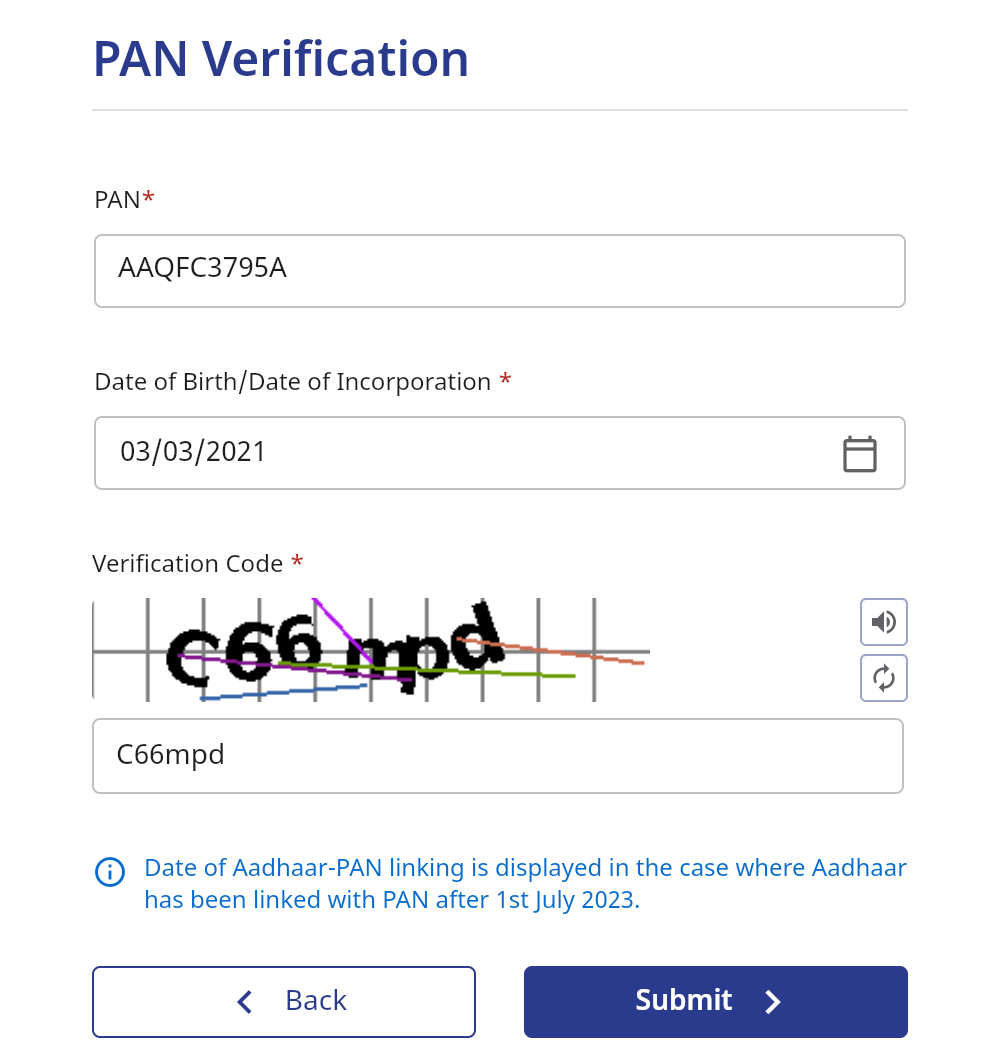
On submitting, the portal shows a “PAN Details” box with the name held against the PAN and the PAN status. Here is the result for our own firm’s PAN:

TRACES PAN Verification form filled with PAN, date of birth and verification code
Step 1: enter the PAN, the date of birth or incorporation, and the verification code, then click Submit.
TRACES PAN Details popup showing the name as C S M & CO LLP and PAN status as Valid
Step 2: the PAN Details box shows the name and PAN status as held in the database.

Notice how the database spells the name: C S M & CO LLP, with spaces between the letters and “CO” in capitals. This is exactly the kind of difference, compared with how we normally write “CSM & Co LLP”, that you should be aware of before filling a registration form.

Practical tips

  • Use the date of birth exactly as recorded for the PAN, not as written on some other document.
  • Keep the name identical across the PAN, the application form and the supporting documents.
  • Do this check for each person involved, such as directors, partners and authorised signatories, when the registration is for a firm or company.
  • Never share your PAN details or OTPs with anyone claiming to verify them for you. Use only the official government website.

Frequently asked questions

Do I need to log in to use this facility?

No. The page asks only for the PAN, date of birth and a captcha, as seen on the portal on 03/10/2026.

Is it only for Income Tax registrations?

No. It is useful before any registration that validates your PAN, including GST, ICEGATE and DSC mapping.

What if the name does not match?

Get the PAN record corrected through the official correction process, and wait for the update before applying for the registration.

Is there a separate check for companies and firms?

The page we reference is the individual PAN verification. For entities, verify the PAN of each individual involved and the entity details on the relevant portal.

How CSM & Co LLP can help

We handle Income Tax and TDS registrations, GST registration, ICEGATE and DSC related work for individuals, firms and companies. We run the PAN check before every application, so that name mismatches are fixed up front rather than after a rejection. Please reach out to our team and we will be happy to assist.

Disclaimer

This article is for general informational purposes only and should not be considered professional advice. Please consult a qualified expert for advice tailored to your specific situation. The author and website owner are not liable for any errors or actions based on this content.
ITR Filing Deadline for AY 2026-27 Extended to 21 November 2026 for Audit Cases

Last updated: 28 September 2026 · Reading time: 5 min

Quick summary

  • ITR filing due date for AY 2026-27 (audit cases) extended from 31 October 2026 to 21 November 2026.
  • Tax audit report specified date extended from 30 September 2026 to 21 October 2026.
  • Applies only to taxpayers whose accounts require audit under the Income-tax Act, 1961.
  • Taxpayers not covered under audit continue to follow their original due dates.

The Central Board of Direct Taxes (CBDT) has, vide Circular No. 7/2026 dated 28 September 2026 (F. No. 225/128/2026/ITA-II), extended the due date for filing Income Tax Returns for Assessment Year 2026-27, for taxpayers covered under clause (a) of Explanation 2 to sub-section (1) of Section 139 of the Income-tax Act, 1961, that is, taxpayers whose accounts are required to be audited.

Correspondingly, the specified date for furnishing the tax audit report for AY 2026-27 has also been extended. This gives audit cases extra time to complete the audit and file the return, but the timeline still needs to be planned carefully so nothing is rushed in the final week.

Notification at a glance

  • Assessment Year: 2026-27
  • Issued by: Central Board of Direct Taxes (CBDT)
  • ITR filing due date: extended from 31 October 2026 to 21 November 2026
  • Tax audit report specified date: extended from 30 September 2026 to 21 October 2026
  • Coverage: persons mentioned at S. No. 2 in the table below Explanation 2 to Section 139(1), that is, taxpayers whose accounts require audit
  • Official circular: Circular No. 7/2026 (PDF), Income Tax Department, Government of India
  • Source announcement: Income Tax India, official post

Revised due dates for AY 2026-27

Compliance Original due date Extended due date
Tax audit report (Section 44AB) 30 September 2026 21 October 2026
ITR filing, audit cases (Section 139(1)) 31 October 2026 21 November 2026

Who this applies to

This extension covers taxpayers whose accounts are required to be audited under the Income-tax Act, 1961, including companies, and individuals, firms and LLPs subject to tax audit under Section 44AB. It does not apply to taxpayers who are not covered under this audit provision, including most salaried individuals and small taxpayers filing ITR-1 or ITR-4; their original due date of 31 July 2026 (or as otherwise notified) remains unchanged.

Employer and taxpayer action checklist

  • Complete the audit first. Use the window up to 21 October 2026 to finish the statutory audit, finalise books, reconciliations and supporting schedules.
  • File the audit report on time. The tax audit report under Section 44AB must be uploaded by 21 October 2026, since the ITR cannot be filed correctly without it.
  • Do not wait till the last date to file the ITR. Once the audit report is filed, file the return at the earliest, rather than waiting until 21 November 2026.
  • Reconcile TDS and GST data in advance. Match Form 26AS, AIS and GSTR data with your books before filing, so the return is not revised later.
  • Keep pending notices and demands in hand. Any outstanding income tax notices should be addressed before filing, not after.

Consequences of missing the extended date

The extension applies only to the compliance dates listed above. If the ITR is still not filed by 21 November 2026 for an audit case, the usual late-filing consequences under the Income-tax Act, 1961 apply, including a late fee under Section 234F, interest under Section 234A on any unpaid tax, and denial of certain deductions and set-off of losses. Filing well ahead of the extended date is the only way to avoid this risk entirely.

Frequently asked questions

Does this extension apply to all taxpayers?

No. It applies only to taxpayers whose accounts require audit under the Income-tax Act, 1961, for AY 2026-27. Non-audit taxpayers must continue to follow their original due date.

Has the due date for non-audit taxpayers also changed?

No. This notification does not change the due date for individuals and entities not covered under the tax audit provisions.

Can the tax audit report be filed after 21 October 2026?

No. 21 October 2026 is now the specified date for furnishing the tax audit report for AY 2026-27. Filing it late attracts penalty under Section 271B, separately from any ITR late-filing consequence.

Should I still pay advance tax or self-assessment tax on time even though the filing date is extended?

Yes. The extension is for the return and audit report filing dates only. Any unpaid tax continues to attract interest under the applicable provisions if not paid before the original timelines.

Could the date be extended further?

CBDT has extended ITR due dates in past years closer to the original deadline as well. CSM & Co LLP will track any further CBDT notification and update clients directly if the date changes again, but it is safer to plan around 21 November 2026 rather than expect another extension.

How CSM & Co LLP can help

At CSM & Co LLP, Chartered Accountants, we handle tax audits, ITR filing and compliance tracking for businesses and professionals across Gujarat. As part of this, we regularly help clients with:

  • Completing the statutory tax audit and filing Form 3CA/3CB-3CD well before the specified date
  • Reconciling TDS credits, GST turnover and books before the return is filed
  • Filing the Income Tax Return accurately for companies, firms, LLPs and individuals subject to audit
  • Tracking CBDT notifications and deadline changes on your behalf, so nothing is missed

Please reach out to our team and we will be happy to assist.

Disclaimer

This article is for general informational purposes only and should not be considered professional advice. Please consult a qualified expert for advice tailored to your specific situation. The author and website owner are not liable for any errors or actions based on this content.
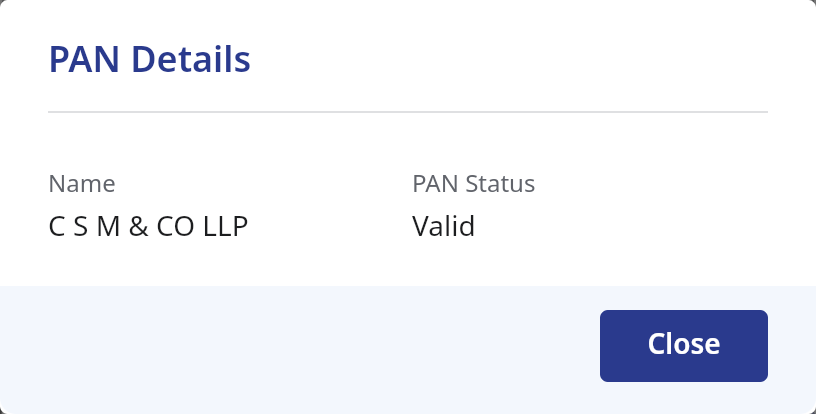
Audit Committee, Nomination and Remuneration Committee and Vigil Mechanism under Sections 177 and 178 of the Companies Act, 2013

Last updated: 09 October 2026 · Written and reviewed by CA Meet Dhrangadhariya, CSM & Co LLP

Quick summary

  • Every listed public company, and the prescribed classes, must have an Audit Committee of at least three directors with independent directors in the majority. Its terms of reference cover auditors, financial statements, related party approval, inter-corporate loans, valuation, internal financial controls and use of funds raised.
  • The Nomination and Remuneration Committee has three or more non-executive directors, at least half independent, and recommends director and senior management appointments, board evaluation and remuneration policy.
  • A Stakeholders Relationship Committee is needed where a company has more than 1,000 security holders at any time in a financial year.
  • A vigil mechanism is required for listed companies and prescribed classes. Contravention carries a fine of Rs 1 lakh to Rs 5 lakh on the company and Rs 1 lakh on each officer in default.

Larger and listed companies must hand some of the Board’s most sensitive work to committees dominated by independent directors. Section 177 sets up the Audit Committee and the vigil mechanism; section 178 sets up the Nomination and Remuneration Committee and the Stakeholders Relationship Committee.

Audit Committee (section 177)

Who must have one. The Board of every listed public company, and of such other classes of companies as may be prescribed, constitutes an Audit Committee.

Composition. A minimum of three directors, with independent directors forming a majority. The majority of members, including the chairperson, must have the ability to read and understand a financial statement.

Terms of reference. The committee acts under written terms of reference set by the Board, which include:

  1. recommending the appointment, remuneration and terms of appointment of auditors;
  2. reviewing and monitoring the auditor’s independence and performance, and the effectiveness of the audit process;
  3. examining the financial statement and the auditors’ report on it;
  4. approval or any subsequent modification of transactions with related parties. The committee may give omnibus approval subject to prescribed conditions. If a transaction (other than one under section 188) is not approved, the committee makes its recommendation to the Board. If a transaction not exceeding Rs 1 crore is entered into by a director or officer without the committee’s approval and is not ratified within three months, it is voidable at the committee’s option, and the director concerned must indemnify the company where it is with a related party or was authorised by another director. This does not apply to transactions, other than those under section 188, between a holding company and its wholly owned subsidiary;
  5. scrutiny of inter-corporate loans and investments;
  6. valuation of undertakings or assets of the company, wherever necessary;
  7. evaluation of internal financial controls and risk management systems; and
  8. monitoring the end use of funds raised through public offers and related matters.

Powers. It can call for the auditors’ comments on internal control systems and the scope of the audit, review financial statements before they go to the Board, discuss issues with internal and statutory auditors and management, investigate any matter within its terms of reference or referred by the Board, obtain professional advice from external sources, and has full access to the company’s records. The auditors and the KMP have a right to be heard in the committee’s meetings when the auditor’s report is considered, but no right to vote.

Disclosure. The Board’s report discloses the composition of the Audit Committee and, where the Board did not accept any recommendation of the committee, that fact with the reasons.

Vigil mechanism (section 177(9) and (10))

Every listed company and the prescribed classes must establish a vigil mechanism for directors and employees to report genuine concerns, in the prescribed manner. It must have adequate safeguards against victimisation of the persons who use it, and direct access to the chairperson of the Audit Committee in appropriate or exceptional cases. The details are disclosed on the company’s website (if any) and in the Board’s report.

Nomination and Remuneration Committee (section 178(1) to (4))

Who must have one. The Board of every listed public company, and of the prescribed classes.

Composition. Three or more non-executive directors, of whom not less than one-half are independent directors. The chairperson of the company, whether executive or non-executive, may be a member but shall not chair the committee.

Functions.

  • Identify persons qualified to become directors and persons who may be appointed in senior management under the laid-down criteria, and recommend to the Board their appointment and removal.
  • Specify the manner of effective evaluation of the performance of the Board, its committees and individual directors, to be carried out by the Board, by the committee or by an independent external agency, and review its implementation and compliance.
  • Formulate the criteria for determining qualifications, positive attributes and independence of a director, and recommend to the Board a remuneration policy for directors, KMP and other employees.

Policy safeguards. The remuneration policy must ensure that (a) the level and composition of remuneration is reasonable and sufficient to attract, retain and motivate directors of the quality required; (b) the relationship of remuneration to performance is clear and meets appropriate benchmarks; and (c) remuneration to directors, KMP and senior management is a balance between fixed and incentive pay reflecting short and long-term performance objectives. The policy is placed on the company’s website (if any), and its salient features and changes, with the web address, are disclosed in the Board’s report.

“Senior management” means the core management team excluding the Board, comprising all members of management one level below the executive directors, including functional heads.

Stakeholders Relationship Committee (section 178(5) and (6))

A company with more than one thousand shareholders, debenture-holders, deposit-holders and other security holders at any time during a financial year constitutes a Stakeholders Relationship Committee. Its chairperson is a non-executive director, and the Board decides the other members. It considers and resolves the grievances of security holders. The inability to resolve or consider a grievance in good faith is not a contravention.

Attendance and penalty

  • The chairperson of each committee, or any member authorised by him, attends the general meetings of the company (section 178(7)).
  • Penalty (section 178(8)): for contravention of section 177 or section 178, the company is punishable with a fine of not less than Rs 1 lakh, up to Rs 5 lakh, and every officer in default is liable to a penalty of Rs 1 lakh, as the section reads after the 2020 amendment (the India Code print of the amended words is repetitive, so confirm the figure against the latest official text).

A short checklist

  1. Test whether your company is a listed public company or in a prescribed class; if so, set up the committees by Board resolution with written terms of reference.
  2. Check the composition rules: three directors with an independent majority for audit; three non-executive directors with at least half independent for nomination and remuneration.
  3. Put the vigil mechanism policy on the website and mention it in the Board’s report.
  4. Count security holders each year against the 1,000 threshold.
  5. Record in the Board’s report the composition of the Audit Committee and any recommendation of that committee which the Board did not accept.

Points to check

  • This post follows the Companies Act as published on India Code, including its amendments up to the footnotes in that edition. The prescribed classes of companies for each committee, the omnibus approval conditions and the vigil mechanism rules are in the Rules, which were not reviewed.
  • Listed companies must also follow the SEBI listing regulations, which add further requirements on the number of meetings, independent directors and the role of each committee.
  • The India Code print of section 178(8) repeats the penalty words after the 2020 substitution. This post reads it as a fine of Rs 1 lakh to Rs 5 lakh on the company and Rs 1 lakh on each officer in default, and that reading should be confirmed.

Frequently asked questions

Which companies must have an Audit Committee?

Every listed public company, and other classes of companies prescribed by the Rules. It must have at least three directors, with independent directors forming a majority. The majority of members, including the chairperson, must be able to read and understand a financial statement.

What does the Audit Committee do?

It acts under written terms of reference set by the Board, which include recommending the appointment, remuneration and terms of auditors; reviewing the auditor’s independence, performance and effectiveness of the audit; examining the financial statements and the auditors’ report; approving related party transactions; scrutinising inter-corporate loans and investments; valuation of undertakings or assets; evaluating internal financial controls and risk management; and monitoring the end use of funds raised through public offers.

Can the Audit Committee approve related party transactions in advance?

Yes. It may make omnibus approval for related party transactions proposed to be entered into, subject to the prescribed conditions.

Who must have a Nomination and Remuneration Committee?

Every listed public company and the prescribed classes. It consists of three or more non-executive directors, not less than one-half of them independent. The chairperson of the company may be a member but cannot chair the committee.

When is a Stakeholders Relationship Committee required?

When the company has more than 1,000 shareholders, debenture-holders, deposit-holders and other security holders at any time in a financial year. Its chairperson must be a non-executive director, and it considers and resolves the grievances of security holders.

What is a vigil mechanism?

A mechanism for directors and employees to report genuine concerns, which every listed company and the prescribed classes must establish. It must protect users from victimisation and give direct access to the chairperson of the Audit Committee in appropriate or exceptional cases. Its details are disclosed on the company’s website and in the Board’s report.

What is the penalty for contravention?

A fine of not less than Rs 1 lakh, up to Rs 5 lakh on the company, and a penalty of Rs 1 lakh on every officer in default (as the section reads after the 2020 amendment).

Official sources

Disclaimer

This article is for general informational purposes only and should not be considered professional advice. Please consult a qualified expert for advice tailored to your specific situation. The author and website owner are not liable for any errors or actions based on this content.
The Supplier Is Genuine. So How Can the Payment Still Be Fraudulent?

 When a Genuine Invoice Leads to a Fraudulent Payment

A supplier may be completely genuine.

The invoice may be genuine.
The goods or services may have actually been received.
The purchase may have been properly approved.
And the payment amount may exactly match the invoice.

Yet, the payment can still be fraudulent.

How?

The risk is not always the supplier. It can be the bank account.

Consider a simple situation.

A company regularly purchases goods from a genuine supplier. The supplier’s name, GST details, invoices and transactions all appear legitimate.

At some point, the supplier’s bank account details are changed in the company’s records.

The new bank account may have been inserted or changed by someone within the accounts or finance process.

The payment is then made to the new account.

From the accounting records, everything may appear normal:

  • Genuine supplier
  • Genuine invoice
  • Genuine purchase
  • Correct invoice amount
  • Proper approval
  • Payment recorded against the supplier

But the money has gone to a different bank account.

In some cases, that account may belong to an employee, an employee’s relative, or another person connected with the fraud.

This is why verifying the supplier is not enough. The payment destination also needs to be verified.

Why can this be difficult to detect?

Most accounting controls focus on whether the transaction itself is genuine.

For example:

Purchase Order → Goods Received → Invoice → Approval → Payment

If all these documents match, the transaction may appear completely legitimate.

But there is another question that is often overlooked:

Who actually owns the bank account to which the payment was made?

If the supplier’s bank details were changed without independent verification, a genuine transaction can become a fraudulent payment.

A simple control that can reveal a serious problem

One practical review is to compare supplier bank-account information with employee-related bank-account information.

For example, take:

  1. The list of active supplier bank accounts.
  2. The list of employee salary bank accounts.
  3. Compare the bank account numbers.
  4. Where appropriate, also compare IFSC codes and account-holder names.
  5. Investigate any unusual matches.

Suppose a supplier’s bank account happens to be the same as an employee’s salary account.

That does not automatically prove fraud.

There could be a legitimate explanation. For example, the employee may have a genuine business relationship with the supplier or may have been authorised to receive payments in a particular arrangement.

However, such a match is certainly a red flag that deserves investigation.

The same principle can be extended to other unusual relationships, such as supplier bank details matching accounts associated with employees or their related parties.

The bigger control: independently verify changes in bank details

The most important control is not simply comparing account numbers.

It is having a proper process whenever supplier bank details are changed.

For example:

Supplier requests change in bank details
↓
Change request is documented
↓
Supporting bank details are obtained
↓
Independent verification is performed using previously known contact details
↓
Change is approved by an authorised person
↓
Bank details are updated in the accounting system
↓
Payment is released

The key word here is independent.

If the same person who receives the bank-change request can also update the master data and release the payment, the control is considerably weaker.

What businesses should consider implementing

A few simple controls can significantly reduce this risk:

1. Maker-checker control

The person who changes supplier bank details should not be the same person who approves the change.

2. Independent verification

Do not rely solely on the email or message requesting the change.

Verify the change through an independent communication channel, such as a previously registered supplier contact number.

3. Maintain an audit trail

Every change to supplier master data should leave a record showing:

  • Who requested the change
  • Who made the change
  • Who approved it
  • When it was changed
  • What the previous bank details were
  • What the new bank details are
4. Review unusual matches

Periodically compare supplier bank details with employee and other relevant master data to identify unusual overlaps.

5. Review recently changed bank accounts

Payments made shortly after a supplier’s bank details have been changed can receive additional scrutiny, particularly where the transaction is large or unusual.

What about the auditor?

This distinction is important.

The existence of a genuine supplier and genuine invoice does not, by itself, establish that the payment was made to the correct beneficiary.

At the same time, an auditor cannot be expected to detect every fraud simply because a fraud has occurred.

The nature and extent of audit procedures depend on the applicable auditing standards, the circumstances, the assessed risks and the controls in place.

For businesses, the practical lesson is therefore not to rely on the audit alone.

Fraud prevention starts with the company’s internal controls.

The question every finance team should ask

When a supplier’s bank details are changed, ask:

Does someone independent verify that the new bank account actually belongs to the genuine supplier before the payment is released?

If the answer is no, there may be a control gap worth addressing.

Because sometimes the supplier is genuine.

The invoice is genuine.

The purchase is genuine.

The approval is genuine.

And yet the money still goes to the wrong person.

That is why supplier verification and payment verification should be treated as two separate controls.

Final takeaway

A genuine supplier does not automatically mean a genuine payment.

The risk can sit between the invoice and the bank transfer, particularly when supplier master data can be changed without adequate verification.

A simple, well-designed process for supplier bank-account changes, independent verification, maker-checker approval and periodic data analysis can help businesses identify and prevent potentially costly payment fraud.

The real question is not only, “Is this supplier genuine?”

It is also:

“Are we certain that the money is going to the genuine supplier?”

Disclaimer:

This article is for general informational purposes only and should not be considered professional advice. Please consult a qualified expert for advice tailored to your specific situation. The author and website owner are not liable for any errors or actions based on this content.
Board Composition and Independent Directors under Sections 149 and 150 of the Companies Act, 2013: Number, Independence Criteria, Term and Liability

Last updated: 09 October 2026 · Written and reviewed by CA Meet Dhrangadhariya, CSM & Co LLP

Quick summary

  • A public company needs at least three directors, a private company two and a One Person Company one, with a maximum of fifteen (more with a special resolution). Every company needs at least one director who stays in India for 182 days or more in the financial year.
  • A listed public company must have at least one-third of its directors as independent directors, with any fraction rounded up to one.
  • An independent director is not an MD, whole-time director or nominee director, is not a promoter or related to one, has no material pecuniary or employment ties, and must give a declaration of independence at the first Board meeting and every year.
  • The term is up to five consecutive years, with one re-appointment by special resolution, and then a three year cooling off. Liability is limited to acts with his knowledge, consent or connivance, or where he did not act diligently.

Section 149 sets the shape of a company’s Board: how many directors, how many must be independent, and what “independent” means. Section 150 deals with how independent directors are selected.

Number of directors (section 149(1) to (3))

Company Minimum Maximum
Public company 3 15
Private company 2 15
One Person Company 1 15
  • A company may appoint more than fifteen directors after passing a special resolution.
  • The Board must consist of individuals.
  • Classes of companies prescribed by the Rules must have at least one woman director.
  • Resident director: every company must have at least one director who stays in India for a total of not less than 182 days during the financial year. For a newly incorporated company, the requirement applies proportionately at the end of the financial year of incorporation.

Independent directors (section 149(4))

Every listed public company must have at least one-third of the total number of directors as independent directors, and a fraction is rounded up to one. For example, a Board of seven needs three independent directors. The Central Government may prescribe a minimum number of independent directors for other classes of public companies.

Who is an independent director (section 149(6))

An independent director means a director other than a managing director, whole-time director or nominee director, who meets all of these tests:

  1. Integrity and expertise: in the Board’s opinion, a person of integrity with relevant expertise and experience.
  2. Promoters and relations: is not and was not a promoter of the company or its holding, subsidiary or associate company, and is not related to promoters or directors of the company or of its holding, subsidiary or associate company.
  3. Money: has no pecuniary relationship with the company, its holding, subsidiary or associate company, or their promoters or directors, other than remuneration as director or a transaction not exceeding 10% of his total income (or the prescribed amount), during the two immediately preceding financial years or the current financial year.
  4. Relatives: none of his relatives (a) holds securities or an interest in the company group above a face value of Rs 50 lakh or 2% of paid-up capital (or a higher prescribed sum) during that period; (b) is indebted to the company group or its promoters or directors above the prescribed amount; (c) has given a guarantee or security for a third person’s debts to the company group above the prescribed amount; or (d) has any other pecuniary transaction or relationship with the company group amounting to 2% or more of its gross turnover or total income.
  5. Employment and professional ties: neither he nor any relative holds or has held the position of KMP or been an employee of the company group in any of the three financial years before the appointment (a relative’s employment during the preceding three years is not a bar); has been an employee, proprietor or partner in the preceding three years of the company’s firm of auditors, company secretaries in practice or cost auditors, or of any legal or consulting firm that had transactions with the group of 10% or more of that firm’s gross turnover; holds together with his relatives 2% or more of the total voting power; or is a chief executive or director of a non-profit organisation that receives 25% or more of its receipts from the company, its promoters, directors or group companies, or that holds 2% or more of the voting power.
  6. Any other prescribed qualification.

A nominee director is a director nominated by a financial institution under any law or agreement, or appointed by any Government or any other person to represent its interests.

Declaration of independence (section 149(7))

Every independent director gives a declaration that he meets the criteria at the first Board meeting in which he participates, then at the first Board meeting of every financial year, and whenever there is a change in circumstances that may affect his status.

Term (section 149(10), (11) and (13))

  • Up to five consecutive years on the Board of a company.
  • Re-appointment for a further term needs a special resolution and disclosure in the Board’s report.
  • No independent director can hold office for more than two consecutive terms, and he is eligible for appointment again only after three years from ceasing to be an independent director. During those three years he cannot be appointed or associated with the company in any other capacity, directly or indirectly.
  • Any tenure on the date the Act commenced is not counted as a term.
  • The rotation rules for retirement by rotation in section 152(6) and (7) do not apply to independent directors.

Remuneration (section 149(9))

An independent director is not entitled to any stock option. He may receive the sitting fee under section 197(5), reimbursement of expenses for attending Board and other meetings, and profit related commission approved by the members. If the company has no profits or inadequate profits, he may receive remuneration, other than the sitting fee, in accordance with Schedule V.

Limited liability (section 149(12))

An independent director, and a non-executive director who is not a promoter or KMP, is liable only for acts of omission or commission by the company that occurred with his knowledge (attributable through Board processes) and with his consent or connivance, or where he had not acted diligently.

Conduct

The company and independent directors must follow the code in Schedule IV (section 149(8)).

Selection (section 150)

  • An independent director may be selected from a data bank of eligible and willing persons maintained by a body notified by the Central Government. The responsibility of due diligence before selecting a person from the data bank lies with the company.
  • The appointment is approved by the company in general meeting, as provided in section 152(2), and the explanatory statement to the notice must give the justification for choosing the appointee.

A short checklist for the company

  1. Count the directors against the minimum and maximum for your class of company; check the 182 day resident director and the woman director requirement for your class.
  2. If listed, calculate one-third (rounded up) of the Board and plan the independent director appointments in time.
  3. Collect the section 149(7) declaration at the first meeting of each financial year.
  4. Track each independent director’s tenure and the three year cooling-off after two terms.
  5. Record in the explanatory statement why the appointee was chosen, and the data bank search.

Points to check

  • This post follows the Companies Act as published on India Code, including its amendments up to the footnotes in that edition. The classes of companies required to have a woman director or independent directors, the prescribed amounts in the independence tests, the data bank rules and Schedules IV and V are in the Rules and Schedules, which were not reviewed in detail.
  • Listed companies must also comply with SEBI’s listing regulations, which carry further requirements on independent directors and committees.

Frequently asked questions

What is the minimum number of directors?

Three for a public company, two for a private company and one for a One Person Company. The maximum is fifteen, and a company can appoint more than fifteen after passing a special resolution.

Is a resident director required?

Yes. Every company must have at least one director who stays in India for a total of not less than 182 days during the financial year. For a newly incorporated company this applies proportionately at the end of the financial year of incorporation.

How many independent directors must a listed company have?

At least one-third of the total number of directors, with any fraction rounded off to one, in a listed public company. The Central Government may prescribe a minimum number of independent directors for other classes of public companies.

Who is an independent director?

A director other than a managing director, whole-time director or nominee director, who in the Board’s opinion has integrity and relevant expertise and experience, and who meets the tests in section 149(6): not a promoter or related to promoters or directors, no material pecuniary relationship, no relevant relatives’ holdings or transactions, and no past employment or professional connection with the company group within three years.

What is the term of an independent director?

Up to five consecutive years, with re-appointment for a second term on a special resolution and disclosure in the Board’s report. No independent director can hold office for more than two consecutive terms, and is eligible again only after three years, during which he cannot be associated with the company in any other capacity.

Is an independent director entitled to stock options?

No. He can receive sitting fees, reimbursement of expenses and, if the members approve, profit related commission; where the company has no profits or inadequate profits, remuneration in accordance with Schedule V.

When is an independent director liable?

Only in respect of acts of omission or commission by the company which occurred with his knowledge, attributable through Board processes, and with his consent or connivance, or where he had not acted diligently. The same protection applies to a non-executive director who is not a promoter or KMP.

Official sources

Related reading

Disclaimer

This article is for general informational purposes only and should not be considered professional advice. Please consult a qualified expert for advice tailored to your specific situation. The author and website owner are not liable for any errors or actions based on this content.